

Calgary’s retail landscape is shifting faster in 2026 than any year post-pandemic. After years of e-commerce pressure forcing small retailers online, strip malls with grocery anchors, high visibility, and drive-up access are seeing a massive resurgence. As a Calgary realtor who works with Alberta business owners daily, I’m watching more entrepreneurs pivot from online-only models to physical strip mall spaces — they’re tired of paying for digital ads that don’t convert, and they’re realizing that local foot traffic from loyal neighborhood residents is far more valuable for service-based and retail businesses. You can read more real estate tips on my blog for ongoing market updates.
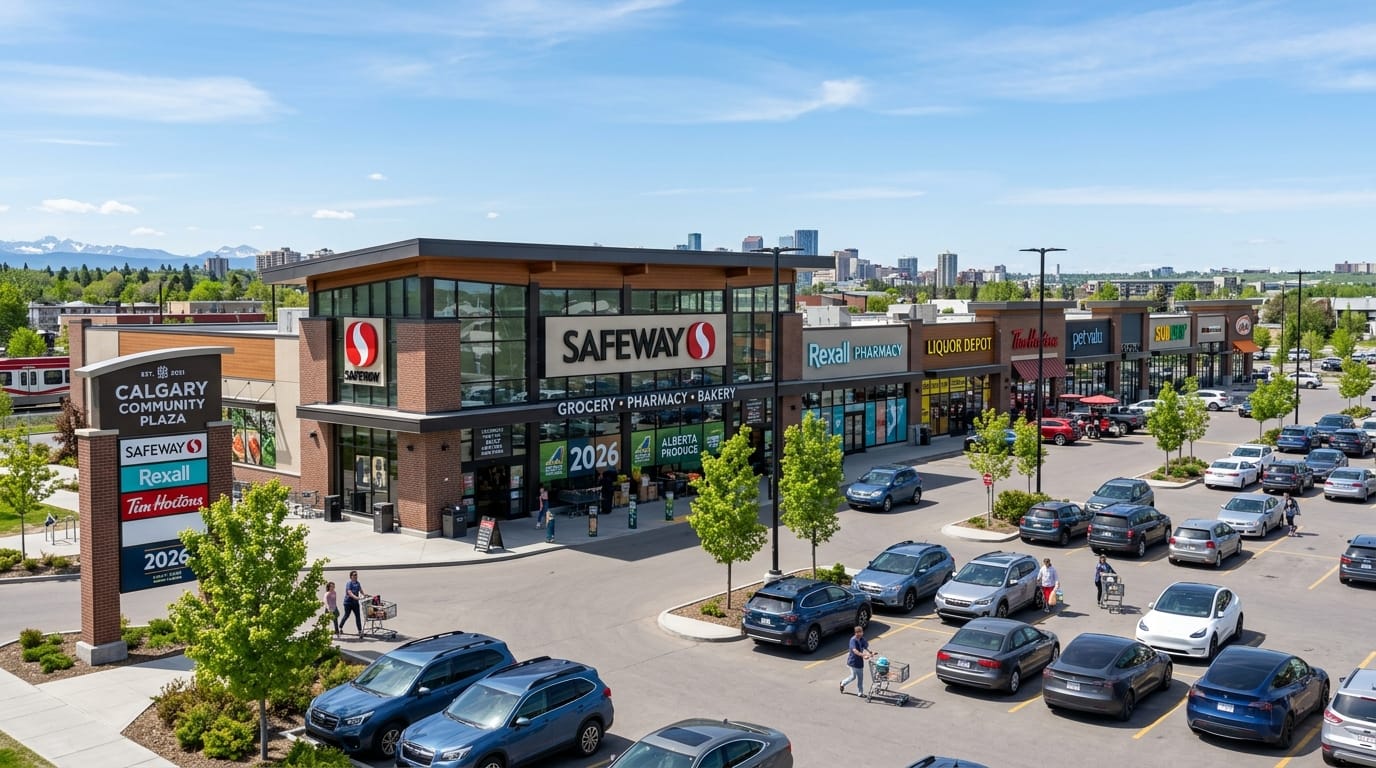
The Calgary Real Estate Board (CREB) 2026 Q1 report notes neighborhood retail centers posted a 95% occupancy rate in the first three months of the year, outperforming downtown retail by 26 percentage points. For business owners considering a strip mall lease this year, the market offers both huge opportunity and hidden pitfalls. Lease rates vary wildly between NW Calgary family hubs like Varsity and SE industrial-adjacent retail corridors like Seton, and Calgary’s updated zoning rules for signage, outdoor patio use, and accessibility can make or break a small business if you don’t understand them before signing.
Whether you’re opening a specialty coffee shop in Sandstone, a medical clinic in Seton, a pet grooming service in Mahogany, or a quick-service restaurant in Forest Lawn, understanding 2026 leasing trends will save you thousands in unnecessary costs and years of operational headaches. I’ll break down exactly what’s driving strip mall demand, which Calgary neighborhoods are seeing the most leasing activity, what lease terms you must negotiate, and the most common pitfalls I see business owners fall into every week.
Why Strip Malls Are Outperforming Downtown Retail in 2026
Downtown Calgary retail is still struggling with a 19% vacancy rate according to the City of Calgary’s 2026 economic update, as hybrid work keeps office foot traffic 30% below pre-2020 levels. Most downtown workers now come into the office 2–3 days a week, and they’re not staying late to shop or eat — they’re heading straight back to their suburban homes where essential services are within walking distance. Strip malls, especially those anchored by grocery stores, pharmacies, or dollar stores, are filling this gap entirely. These centers serve local neighborhoods directly, capturing daily foot traffic from residents who value convenience over downtown destination shopping.
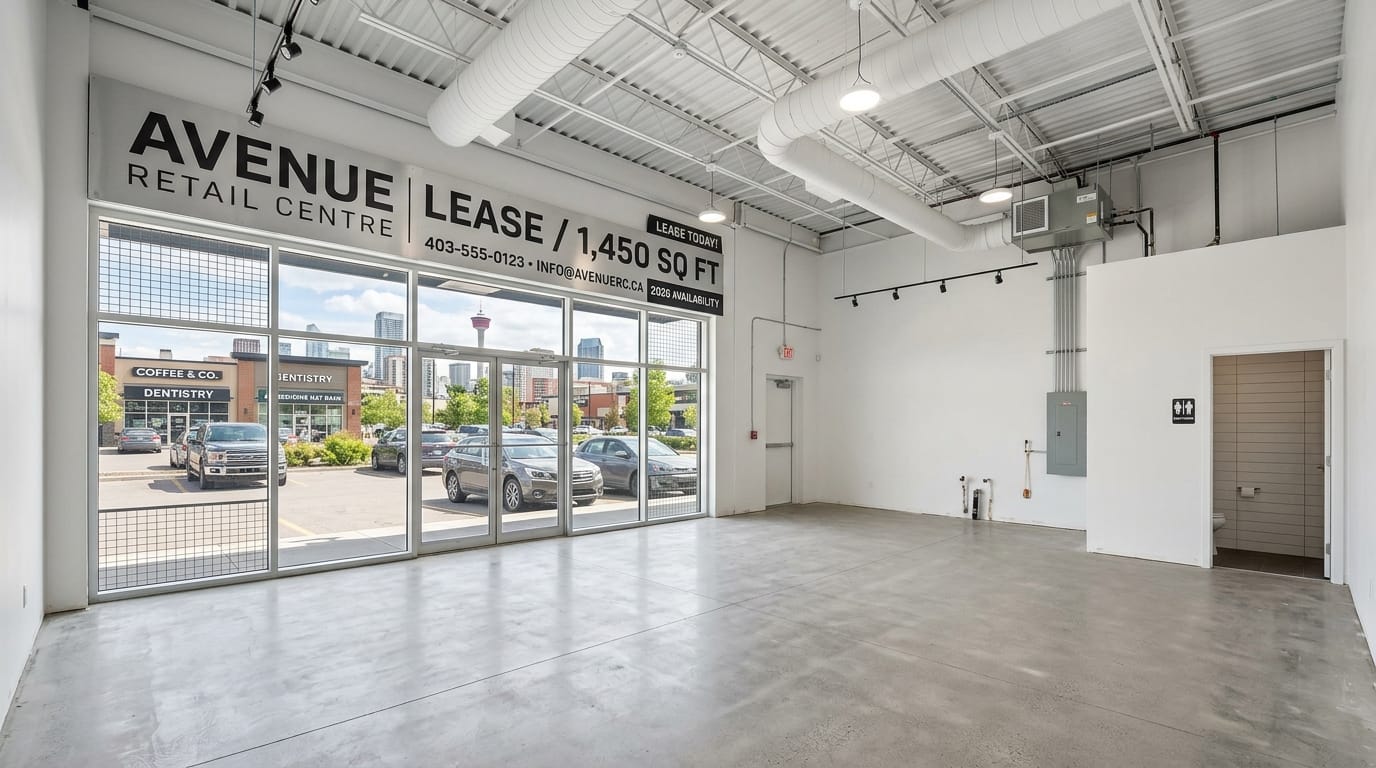
In 2026, I’m seeing the strongest demand for strip mall bays between 1,200 and 2,500 square feet. These spaces work perfectly for service-based businesses: hair salons, physio clinics, vape shops, nail salons, quick-service restaurants, and small grocery boutiques. Landlords prefer long-term tenants with proven cash flow, but new Alberta businesses can still secure space with a solid 12-month business plan, 6–12 months of rent deposits, and a clear track record in their industry. I recently helped a first-time business owner open a bubble tea shop in a Bowness strip mall with only 6 months of deposits because their business plan included detailed local foot traffic data and supplier contracts.
Lease rates for prime strip mall spaces range from $28 to $42 per square foot annually, depending entirely on visibility from major roads, parking availability, and anchor tenant quality. Centers along Crowchild Trail or Stony Trail command higher rates, while older strips in Forest Lawn or Bowness offer more affordable entry points for first-time business owners. Always verify parking ratios with the landlord — Calgary bylaw requires a minimum of 4 stalls per 1,000 square feet of retail space, and many older strips are grandfathered in with far fewer stalls, which will hurt your customer traffic. For a full list of available commercial spaces across the city, you can browse current commercial listings on patelsanket.ca before touring properties.
Top Calgary Neighborhoods for Strip Mall Leasing This Year
Seton continues to lead strip mall leasing activity in 2026, driven by the new Calgary Cancer Centre and rapid residential growth in SE Calgary. Retail bays near Seton’s grocery-anchored centers are leasing within 30 days of listing, with average lease terms of 5–7 years. Bays in Seton typically cost $38–$42 per square foot, but the foot traffic from hospital staff, patients, and new residents justifies the premium for many businesses. I leased a 1,800-square-foot physio clinic in Seton last month that had 12 tour requests in the first week, and the tenant secured it with a 7-year term and $22 per square foot in tenant improvement allowances to cover their medical equipment installation.
Mahogany and Auburn Bay in SE Calgary are also top spots. These family-focused communities have high demand for kids’ services, coffee shops, pet grooming, and boutique fitness studios. Strip malls here offer newer builds with modern HVAC, energy-efficient lighting, and flexible signage options, leasing at $32–$36 per square foot. I recently helped a local bakery secure a 1,800-square-foot bay in Auburn Bay with a 5-year term and $20 per square foot in tenant improvement allowances to cover their kitchen build-out. The bakery owner told me they chose Auburn Bay specifically because 70% of the residents are families with kids under 12, their exact target demographic.
NW Calgary neighborhoods like Varsity, Dalhousie, and Brentwood remain stable choices for strip mall leasing. These established areas have loyal local customer bases and far less turnover than newer suburbs. Lease rates here average $30–$34 per square foot, with landlords often open to shorter 3-year terms for qualified tenants. Varsity is particularly popular for medical and professional services, as it’s close to Foothills Hospital and has a high concentration of seniors who prefer local services. You can learn more about Calgary communities and their retail potential before narrowing down your search area.

Forest Lawn and Bowness offer the most affordable entry points for new business owners. Lease rates here range from $24 to $30 per square foot, but these areas have higher crime rates and less foot traffic than newer suburbs. I only recommend these areas for businesses with low foot traffic needs, like auto repair accessories or wholesale suppliers. Bowness is seeing new investment in 2026 as the city expands the Bow River pathway system, which is bringing more cyclists and pedestrians to local strip malls. The area is also seeing new condo developments nearby, which will increase local foot traffic by an estimated 15% over the next 24 months.
Key Lease Terms to Negotiate for Your Alberta Business
Too many new business owners sign strip mall leases without pushing back on standard terms, and it costs them tens of thousands of dollars over the life of the lease. In 2026, I always advise clients to negotiate four specific items: tenant improvement (TI) allowances, rent escalation caps, exclusivity clauses, and assignment rights. TI allowances cover the cost of customizing the space for your business — a bakery or medical clinic will need far more build-out than a retail clothing store or hair salon.
Rent escalation caps limit how much your rent can increase annually. Many Calgary landlords push for 4–5% yearly increases, but I’ve successfully negotiated caps of 2–3% tied to the Alberta Consumer Price Index (CPI) for multiple clients. This protects your business from sudden rent spikes that can eat into your margins as your business grows. The Alberta Government’s commercial tenancy guide offers a clear breakdown of your rights as a tenant under Alberta law, including limits on rent increases and eviction rules. I also recommend requesting a 6-month rent abatement period for the first year if you’re doing extensive TI work, which gives you time to build up cash flow before full rent kicks in.
Exclusivity clauses prevent the landlord from leasing a neighboring bay to a direct competitor. If you’re opening a coffee shop, an exclusivity clause stops them from leasing the unit next door to another café. These clauses are especially important in smaller strip malls with 5–8 total bays. I also recommend adding an assignment clause that lets you sell your business and transfer the lease to the new owner without landlord approval, as long as the new owner meets basic financial qualifications. This protects your business’s resale value if you decide to exit in 3–5 years. In 2026, I’ve seen too many business owners stuck with leases they can’t transfer, forcing them to break the lease and lose their entire deposit.
Common Pitfalls to Avoid When Leasing Strip Mall Space
Zoning is the biggest pitfall I see in 2026. Just because a space was previously a restaurant doesn’t mean you can open a similar business there. Calgary’s zoning bylaws changed in 2025 to require additional permits for businesses serving alcohol, operating drive-thru windows, or offering outdoor patios. Always confirm the current zoning designation with the City of Calgary’s planning portal before signing any offer to lease. I worked with a client last month who almost signed a lease for a juice bar, only to find out the space was zoned for retail only, not food service — they lost $3,000 in deposit fees because they didn’t check zoning first.
Hidden costs are another major issue. Many strip mall leases include additional rent charges for common area maintenance (CAM), property taxes, and insurance. In 2026, CAM fees in Calgary range from $8 to $15 per square foot annually, which can add 25–40% to your base rent. Ask for a full breakdown of additional rent costs for the past 3 years before signing, and cap CAM fee increases at 5% per year to avoid surprise bills. I also recommend requesting a separate meter for utilities, as some landlords charge inflated utility rates to tenants in older strips. In one case last year, a client was paying $800/month for electricity in a 1,500-square-foot bay because the landlord was marking up the rate by 40%.
Signage visibility is often overlooked until it’s too late. Calgary bylaws restrict sign size, placement, and lighting for strip mall businesses, and some landlords have strict signage guidelines that limit your ability to attract passing traffic. Walk the center at different times of day to check visibility from the main road, and confirm your signage rights in writing as part of the lease agreement. Accessibility requirements are also a common pitfall: all strip malls built after 2019 must have automatic doors, accessible washrooms, and ramp access, and the cost of retrofits can fall on the tenant if not negotiated upfront. In 2026, accessibility fines from the Alberta government can reach $5,000 per violation, so this is not an area to overlook.
How to Prepare Your Business for a Strip Mall Lease in 2026
Before you start touring strip mall spaces, you need to have your business documents in order. Landlords will ask for a 12-month business plan, 2 years of personal tax returns, a credit score above 680, and proof of 6–12 months of rent deposits. New businesses without 2 years of history can substitute a detailed industry experience resume, supplier contracts, and a letter of reference from a previous employer or business partner. I also recommend preparing a simple cash flow projection for the first 12 months of operations, showing your break-even point and expected revenue growth.
I also recommend getting pre-approved for a business loan before touring spaces, even if you don’t need the full amount for lease deposits. A pre-approval letter shows landlords you’re a serious tenant, and it can give you leverage to negotiate better lease terms. The Canada Small Business Financing Program offers loans up to $1 million for leasehold improvements, with government guarantees that make it easier to qualify than traditional bank loans. In 2026, I’ve seen approval times drop to 15 business days for qualified applicants, down from 30 days in 2025.
Finally, hire a Calgary commercial realtor to represent you in lease negotiations. Landlords pay their own realtors, so you don’t pay anything for representation, and a local realtor will know which landlords are open to negotiation, which centers have hidden issues, and what fair market rates are for your specific neighborhood. I’ve saved clients an average of $12,000 per lease in TI allowances and rent caps over the past 12 months alone. A good commercial realtor will also spot zoning red flags, hidden costs, and unfair lease terms that you might miss on your own.
2026 Market Outlook for Calgary Strip Malls
Looking ahead to the second half of 2026, I expect strip mall leasing activity to remain strong in SE Calgary, with Seton and Mahogany continuing to lead the market. NW Calgary will see steady demand from medical and professional services, while Forest Lawn and Bowness will remain budget-friendly options for new business owners. Interest rates are expected to hold steady at 5.2% for the remainder of 2026, which keeps borrowing costs predictable for business expansion.
One trend to watch is the rise of mixed-use strip malls that combine retail bays with small office spaces upstairs. These developments are popular in Seton and University District, offering business owners the chance to lease both a retail front and an office or storage space in the same building. Lease rates for these mixed-use spaces average $38 per square foot, but they eliminate the need to lease separate locations for front-of-house and back-office operations.
If you’re ready to find the right strip mall space for your Alberta business, I can help you navigate 2026 leasing trends, negotiate fair terms, and avoid costly mistakes. Reach out today to schedule a free commercial real estate consultation and let’s find a space that supports your business growth for years to come.
Looking for the Best Real Estate Agent in Calgary?
Sanket Patel is a top-rated Calgary realtor serving Calgary and surrounding areas. Whether you’re buying, selling, or investing in commercial property, get local expertise that delivers results.
Call today: 403-918-7080 | Free Consultation