Author: mediamanager

  • Industrial Real Estate Trends in Airdrie 2026: What Investors Need to Know

    Industrial Real Estate Trends in Airdrie 2026: What Investors Need to Know

    Industrial Real Estate Trends in Airdrie 2026: What Investors Need to Know

    Airdrie’s industrial real estate market is having its strongest run in a generation. Located just 15 minutes north of Calgary along the Queen Elizabeth II Highway, this fast-growing city of 85,000+ residents has quietly become one of Alberta’s most sought-after destinations for logistics operators, e-commerce fulfillment centres, and light manufacturers. With Calgary’s industrial vacancy rates hovering near historic lows and land prices climbing steadily northward, 2026 is shaping up to be a defining year for industrial real estate airdrie 2026 investments. If you’ve been watching the Calgary commercial market, Airdrie deserves a serious look.

    For informational purposes only. Always consult with a licensed real estate professional before proceeding with any real estate transaction.

    Why Airdrie Is Alberta’s Hottest Industrial Submarket

    Three powerful forces are converging to drive Airdrie’s industrial boom, creating what many local brokers call a once-in-a-decade opportunity for investors who move early.

    First, Calgary’s industrial vacancy rate has fallen below 2%, according to CREB’s latest quarterly market reports. When vacancy drops that low, tenants who can’t find space in Calgary naturally look to surrounding communities. Airdrie, with its available land inventory and direct highway access, is the primary beneficiary of this spillover demand.

    Second, Airdrie’s land prices remain 30-40% lower than comparable industrial sites in Calgary’s East and Southeast corridors. For a company needing 50,000 square feet of warehouse space, that differential can translate to millions of dollars in savings over a 10-year lease. Every dollar saved on occupancy costs flows directly to the bottom line.

    Third, the city is investing heavily in infrastructure. The Highway 2 interchange upgrades at 58th Street and 110 Avenue have streamlined truck access to industrial subdivisions. CN Rail serves the downtown corridor, providing rail-served options for manufacturers and bulk distributors. And the ongoing expansion of Airdrie’s water and wastewater capacity is unlocking new parcels for development that were previously constrained.

    The result is a market where demand consistently outpaces new supply. Speculative buildings in Airdrie’s industrial parks are leasing up before construction crews finish the tenant improvements. For investors, this dynamic means lower vacancy risk and stronger rental growth than almost any other Alberta submarket right now. When evaluating industrial real estate Airdrie 2026 opportunities, the fundamentals point clearly toward continued growth.

    Current Lease Rates and Price Per Square Foot

    Understanding current pricing is essential whether you’re leasing space or purchasing an industrial asset in Airdrie. The market has moved quickly in the past 18 months, and 2026 pricing reflects strong demand across all industrial bays.

    As of mid-2026, industrial lease rates in Airdrie range from $10.50 to $14.00 per square foot on a net lease basis. The rate you pay depends on several factors:

    • Building age and condition: New-build spec space from 2024-2025 commands $13-$14/sq ft. Buildings from the early 2000s lease closer to $10.50-$11.50. – Clear height: Warehouses with 32-foot clear heights rent at a $1-$2/sq ft premium over 24-foot buildings. – Loading dock count: Properties with abundant dock-high loading ($8+ doors per 25,000 sq ft) attract distribution tenants willing to pay top dollar. – Office component: Buildings with 15-20% office buildout command higher rates than pure warehouse space.

    For investors purchasing industrial buildings, sale prices range from $180 to $240 per square foot depending on tenant quality, lease term remaining, and building specifications. Cap rates typically fall between 5.5% and 7.0%, with higher cap rates reflecting shorter lease terms or below-market rents.

    Compared to Calgary, Airdrie offers a 15-25% discount on both lease rates and purchase prices. That gap has been narrowing steadily — a trend that favours early movers who lock in today’s rates before Airdrie fully matures as an industrial market. Investors tracking retail strip mall leasing Calgary returns will find that industrial assets offer higher yields with lower management intensity.

    Key Growth Corridors in Airdrie

    Not all Airdrie industrial zones offer the same return potential. Three submarkets stand out for 2026 investors, each with distinct tenant profiles and investment characteristics.

    Highway 2 (QEII) Corridor

    This is Airdrie’s premier industrial corridor and the newest submarket. Exit ramps at Yankee Valley Boulevard and 110 Avenue provide direct highway access for truck traffic. Most spec developments delivered since 2023 are concentrated here. Tenants include regional distribution centres, building supply companies, and food logistics firms. Land prices along Highway 2 are the highest in Airdrie — $8-$12 per buildable square foot — but the visibility and accessibility justify the premium.

    Downtown Rail-Served Corridor

    The industrial area adjacent to downtown Airdrie is served by CN Rail, making it the go-to location for manufacturers and bulk commodity distributors. This submarket has very limited new supply, which means existing buildings hold their well. Lease rates are slightly lower than Highway 2 ($9-$11/sq ft), but tenant retention is exceptionally high — rail-served buildings are expensive for tenants to relocate out of.

    Airdrie Airfield Business Park (South Airdrie)

    South of the city near the Airdrie airfield, this mixed-use commercial zone is the most affordable entry point. Lot prices are 20-30% lower than the Highway 2 corridor, and the zoning permits a wider range of uses including aviation-adjacent businesses, data centres, cold storage, and specialty manufacturing. Infrastructure is still catching up — some lots lack full utility servicing — but early entrants stand to benefit as the area matures.

    What to Look For When Leasing Warehouse Space in Airdrie

    Lease negotiations for industrial property airdrie involve dozens of details that can significantly impact your operating costs. Here’s a practical checklist for tenants evaluating warehouse space:

    • Minimum 28-foot clear height — Modern racking and automation systems require vertical space. Anything below 28 feet limits your storage density. – One loading dock per 10,000 sq ft — Insufficient dock doors create loading bottlenecks. Confirm dock door dimensions (typically 8×9 or 8×10 feet). – ESR 60/40 or wet sprinkler system — Required for most storage permits. The fire rating directly affects what you can store and your insurance premiums. – Three-phase power (600V minimum) — Essential for manufacturing equipment. Confirm amperage — 400A+ is standard for light industrial. – Truck court depth of 130+ feet — Manoeuvring 53-foot trailers requires adequate turning radius. Shallow truck courts cause costly delays. – LED T-bar lighting throughout — Reduces electricity costs by 30-40% compared to older metal halide fixtures. Ask for a lighting retrofit clause if the building still has HID lighting. – Separate utility meters — If leasing multi-tenant space, ensure you have your own electrical and gas meters to avoid cross-charging. – Roof condition and warranty — Industrial roof replacements cost $8-$15 per square foot. A roof with less than 10 years remaining warranty should trigger a price negotiation or landlord repair clause. – Landlord vs. tenant maintenance obligations — Triple-net (NNN) leases put structural repairs on the tenant. Understand who pays for roof, foundation, and HVAC replacement before signing.

    Spending time on these details during lease negotiations saves thousands of dollars annually in operating costs. Whether you need a small bay for a contracting business or a 30,000 sq ft distribution centre, finding the right warehouse for lease Airdrie starts with understanding your operational requirements and matching them to the right building. A qualified commercial agent experienced in Airdrie’s industrial market can help you benchmark terms against comparable deals.

    Industrial Zoning and the City of Airdrie

    Before signing a lease or making a purchase offer, always verify the property’s zoning designation. Airdrie’s Municipal Development Plan designates specific areas for industrial use, and operating an unapproved business on industrially zoned land can result in costly shutdowns and relocation expenses.

    The primary industrial zoning designations in Airdrie include:

    • I-1 (Business Light Industrial): Permits offices, showrooms, retail showrooms, and light assembly. This is the most flexible designation and works well for tenants who need both warehouse and customer-facing space. – I-2 (General Industrial): Allows heavy manufacturing, warehousing, distribution, and outdoor storage. Best suited for logistics operations and industrial users with higher noise or truck traffic. – MX-1 (Mixed Use — Industrial/Commercial): Combines commercial and light industrial uses. Growing in popularity near transit-oriented development areas where the city wants to encourage live-work-play environments.

    The City of Calgary planning department oversees regional land use coordination for properties near the Calgary-Airdrie boundary, particularly in the Range Road 293 corridor. Developers and investors should consult both Airdrie and Calgary planning when parcels fall near the border.

    For specific zoning confirmation, the City of Airdrie’s planning and development office provides zoning compliance letters and can advise on pending land use bylaw amendments. Processing times are typically 5-10 business days. Always request a zoning compliance certificate as a condition of your purchase or lease agreement.

    Financing Industrial Property in Airdrie

    Securing the right financing structure is just as important as finding the right property. Industrial acquisitions in Airdrie can be financed through several channels, each with distinct advantages.

    Conventional Bank Finances

    Major banks including RBC, TD, and ATB Financial actively lend on Airdrie industrial properties. Typical terms include 75% loan-to-value (LTV), 25-year amortization, and 5-year fixed terms at rates currently ranging from 5.5% to 7.0%. Lenders will evaluate the property’s appraised value, your personal financial statements, and the tenant’s creditworthiness if the property is leased. ATB Financial, as an Alberta-based institution, tends to offer the most competitive rates for local borrowers.

    CMHC Commercial Mortgage Insurance

    For owner-occupied industrial purchases, CMHC-insured commercial mortgages allow borrowing up to 85% LTV, significantly reducing your equity requirement. The borrower pays a mortgage insurance premium (typically 1-3% of the loan amount) which can be added to the principal. This option is particularly attractive for business owners purchasing their own building instead of leasing.

    BDC Term Financing

    The Business Development Bank of Canada offers term loans for owner-occupied industrial real estate, covering up to 100% of the purchase price in some cases. BDC is often willing to work with newer businesses that don’t yet have the track record banks require.

    Working with a commercial mortgage broker who knows the Airdrie market saves time and money. Brokers have relationships with multiple lenders and can often negotiate better terms than you’d secure on your own.

    The E-Commerce Effect on Airdrie Industrial Demand

    The explosive growth of online shopping is fundamentally reshaping Calgary commercial real estate and its surrounding markets. Airdrie is positioned at the centre of this transformation, and the implications for industrial investors are significant.

    Amazon, Purolator, FedEx Ground, and several third-party logistics (3PL) companies have expanded into Airdrie’s industrial parks since 2023. Their primary motivation is last-mile distribution efficiency: Airdrie sits within a 30-minute drive of 1.2 million consumers across Calgary, Airdrie, Cochrane, and Chestermere. That reach, combined with lower occupancy costs and easier truck access than Calgary’s congested inner-city warehouses, makes Airdrie an ideal logistics hub.

    Carrier demand is diversifying beyond the major parcel carriers in 2026. Regional grocery delivery services, pharmacy distributors, and building materials suppliers are all leasing industrial space for micro-fulfillment operations. These tenants typically need 5,000-20,000 sq ft of space with moderate loading requirements and good vehicle accessibility.

    For investors, the e-commerce tailwind means rising rents and compressed cap rates for well-located industrial properties. The 3PL and fulfillment tenant category also tends to sign longer leases (5-7 years) than traditional warehouse tenants, providing stable, predictable income. This is a key reason why industrial real estate Airdrie 2026 is attracting attention from institutional and private investors alike.

    Risks and Challenges to Watch

    Every market carries risks, and Airdrie is no exception. Sophisticated investors monitor these factors closely:

    Interest Rate Pressure: Rising interest rates compress cap rates and increase debt service costs. If you’re using leverage on an Airdrie industrial acquisition, stress-test your cash flow at rates 200 basis points above your current rate to ensure you can weather a downturn.

    Overbuilding Risk: Airdrie has several spec buildings delivering in late 2026 and early 2027. If all deliver simultaneously without proportionate demand growth, vacancy could temporarily spike from the current 3-4% to 6-8%. However, historical absorption patterns suggest the market will digest new supply within 12-18 months.

    Infrastructure Lag in South Airdrie: While the Airfield Business Park offers attractive pricing, some lots still lack full utility servicing. Confirm water, sewer, gas, and power availability before committing to a purchase. Unserviced lots can face 6-12 month delays in getting connected.

    Environmental Remediation: Older industrial sites near the downtown rail corridor may carry environmental liabilities. Always commission a Phase 1 Environmental Site Assessment (ESA) before purchasing any industrial property. If Phase 1 flags potential contamination, a Phase 2 ESA will determine remediation costs. Budget $15,000-$50,000 for assessments depending on property size and history.

    Tenant Concentration: In smaller multi-tenant industrial buildings, losing a single tenant can significantly impact your cash flow. Diversify your tenant base and maintain a capital reserve equal to at least 3 months of debt service and operating expenses.

    Working with a knowledgeable commercial agent who understands Airdrie’s industrial submarkets helps you identify and mitigate these risks. Due diligence isn’t an expense — it’s an investment in protecting your returns.

    FAQ

    What is the industrial vacancy rate in Airdrie in 2026?

    Airdrie’s industrial vacancy rate is estimated at approximately 3-4% in mid-2026, slightly above Calgary’s sub-2% rate but well within the healthy range. New speculative deliveries in the second half of 2026 may temporarily push vacancy toward 5% before strong absorption brings it back down by early 2027. For context, any vacancy rate below 6% is considered a landlord’s market.

    How do Airdrie industrial lease rates compare to Calgary rates?

    Airdrie’s industrial lease rates are approximately 15-25% lower than comparable space in Calgary’s Southeast and East industrial corridors. This differential has narrowed from 30-35% just three years ago, reflecting Airdrie’s maturation as a logistics market. For tenants, the savings are meaningful — a 20,000 sq ft warehouse in Airdrie leases for approximately $20,000-$28,000/month compared to $25,000-$35,000/month in Calgary.

    Is Airdrie a good market for small or first-time industrial investors?

    Absolutely. Multi-tenant industrial plazas in Airdrie ranging from 15,000 to 40,000 sq ft offer accessible entry points, typically priced between $3.5 million and $8 million. These properties generate stable cash flow from diversified tenant bases and require less hands-on management than larger single-tenant facilities. Many first-time investors start with a multi-tenant industrial property and build their portfolio from there.

    What industries are leasing the most industrial space in Airdrie?

    As of mid-2026, the dominant tenant sectors in Airdrie’s industrial market are: logistics and distribution (35%), construction trades and building supplies (20%), e-commerce fulfillment (15%), light manufacturing (15%), automotive and equipment services (10%), and technology/data services (5%). The logistics and e-commerce categories are growing fastest, driven by Calgary’s expanding consumer base and the shift to online retail.

    How can I finance an industrial property purchase in Airdrie?

    Most buyers use one of three financing channels: conventional bank financing at 75% LTV, CMHC-insured commercial mortgages at up to 85% LTV, or BDC term financing for owner-occupied purchases. A commercial mortgage broker can compare rates from ATB Financial, RBC, TD, BDC, and other active Alberta lenders. Expect to provide personal financial statements, property appraisal, and environmental assessment reports as part of the due diligence process.

    Ready to Explore Airdrie Industrial Opportunities?

    Whether you’re an investor seeking strong risk-adjusted returns, a business owner looking for cost-effective warehouse space, or a developer evaluating Airdrie’s industrial growth corridors, the data is clear: airdrie commercial real estate offers compelling fundamentals in 2026.

    The combination of population growth, constrained Calgary supply, infrastructure investment, and e-commerce tailwinds creates a window of opportunity that won’t stay open forever. For a personalized analysis of available industrial properties, lease comparisons, or investment projections tailored to your situation, get in touch with Sanket Patel. With years of commercial real estate experience across Calgary and the surrounding corridor communities, Sanket provides the local market knowledge and strategic advice you need to make a confident investment decision.

    Get in touch with Sanket Patel, REALTOR®

    📞 403-918-7080
    🌐 www.patelsanket.ca
    📍 820 26 St NE, Calgary, AB T2A 2M4
    Facebook Instagram TikTok YouTube REALTOR.ca Google

  • Industrial Real Estate Trends in Airdrie 2026: What Investors Need to Know

    Industrial Real Estate Trends in Airdrie 2026: What Investors Need to Know

    Industrial Real Estate Trends in Airdrie 2026: What Investors Need to Know

    Airdrie’s industrial real estate market is having its strongest year in over a driven by population growth, e-commerce logistics demand, and Calgary’s spillover expansion. For investors and business owners evaluating industrial property in Airdrie, the window of opportunity is still open — but the landscape is shifting fast.

    Located just 35 kilometres north of downtown Calgary along the Queen Elizabeth II Highway, Airdrie has transformed from a bedroom community into a major logistics and light manufacturing hub. The city’s population crossed 80,000 in 2025, and that growth is directly fuelling demand for warehouse space, distribution centres, and flex industrial buildings.

    This guide breaks down the key trends shaping Airdrie’s industrial market in 2026, what the numbers actually show, and how investors can position themselves for the next phase of growth.

    Airdrie’s Industrial Inventory: Supply Is Tightening

    Airdrie’s total industrial inventory sits at roughly 4.2 million square feet across approximately 185 buildings, according to data from the Calgary Real Estate Board (CREB). Vacancy rates for industrial space in the Airdrie-Cochrane corridor dropped to 4.1% in Q1 2026, down from 6.3% the previous year.

    That’s well below the 7% threshold that signals a balanced market. Sub-5% vacancy means tenants have less negotiating power, and landlords can push rents higher.

    The tightest segment is warehouse and distribution space under 10,000 square feet. These smaller bays are in high demand from e-commerce businesses, trades companies, and regional distributors who need proximity to both Calgary and the Trans-Canada Highway without paying Calgary-level rents.

    New construction is coming online, but not fast enough. Three industrial developments broke ground in late 2025 — including the Eastpoint Expansion and the Airdrie Airpark Phase 2 — adding an estimated 380,000 square feet by mid-2027. In the meantime, expect competition for available space to remain fierce.

    Lease Rates: What $/sqft Gets You in 2026

    Net asking rents for industrial space in Airdrie have climbed steadily:

    • Warehouse/distribution (10,000+ sq ft): $10.50–$12.75/sq ft net
    • Flex industrial (5,000–10,000 sq ft): $12.00–$14.50/sq ft net
    • Light manufacturing: $11.00–$13.25/sq ft net
    • Small bay retail/industrial hybrid: $14.00–$17.00/sq ft net

    Compared to Calgary’s industrial corridor (where net rents range from $11.50 to $16.00/sq ft depending on class and location), Airdrie offers a 15–25% discount for comparable quality and access.

    For a business leasing 5,000 square feet of flex industrial space, that translates to annual savings of $15,000–$20,000 compared to a similar Calgary location. Over a five-year lease, those savings compound significantly.

    It’s important to note that net rents exclude property taxes, insurance, and common area maintenance (CAM charges). In Airdrie, expect additional operating costs of $3.50–$5.00/sq ft depending on the building class and age.

    Key Growth Drivers Behind Airdrie’s Industrial Boom

    Population and residential development

    Airdrie is one of the fastest-growing cities in Alberta. The city approved over 2,400 new residential units in 2025 alone, with several major subdivisions in the Ramsay, Bayside, and Stillwater communities still in active build-out phases. Every new household generates demand for local services — from HVAC companies and plumbing suppliers to food distributors and construction materials.

    E-commerce and last-mile logistics

    The rise of same-day and next-day delivery has transformed industrial real estate across Canada. Airdrie’s position along the QE2 highway makes it an ideal last-mile distribution point for serving both Calgary and the surrounding rural communities. Companies like Amazon, Purolator, and several regional 3PL providers have expanded their foothold in the Airdrie industrial park area over the past 18 months.

    Calgary spillover effect

    As Calgary’s industrial vacancy drops below 3% and lease rates push past $14/sq ft for Class A space, businesses are looking north. Airdrie offers similar highway access, a skilled labour pool, and significantly lower occupancy costs. This spillover effect is the single biggest driver of Airdrie’s industrial demand in 2026.

    Provincial economic diversification

    The Alberta government’s economic diversification strategy has brought new investment into technology, agri-food processing, and renewable energy manufacturing. Airdrie’s business-friendly environment and available industrial land make it attractive for companies in these emerging sectors.

    Zoning and Development: Where New Supply Is Coming

    The City of Airdrie’s Municipal Development Plan designates several key areas for industrial growth:

    Eastpoint Business Park — Airdrie’s flagship industrial area, located east of the QE2. Home to over 60 businesses ranging from oilfield services to food processing. The Eastpoint Expansion will add approximately 120 acres of serviced industrial land over the next three years.

    Airdrie Airpark — Located adjacent to the Airdrie Regional Airport (CYXD), this zone is designated for aviation-related industries, light manufacturing, and logistics. Phase 2 is underway with new hangar and warehouse construction.

    South Pointe Industrial Park — The newest designated industrial area, south of Veterans Boulevard. Still in early stages of servicing, but attracting interest from cold-storage and food-processing operators.

    Investors should monitor the City of Airdrie’s subdivision and development activity maps regularly. Land prices in newly serviced industrial zones have increased 18–22% since 2024, and serviced lots in Eastpoint are now asking $28–$35 per square foot.

    FLAWLESS Checklist: Evaluating an Industrial Property in Airdrie

    Before committing to a lease or purchase in Airdrie’s industrial market, work through this checklist:

    • Verify zoning designation allows your intended use (check with City of Airdrie Planning)
    • Confirm loading dock count, door heights (minimum 14 ft for modern logistics)
    • Assess power supply — look for 600V/400A service minimum for light manufacturing
    • Review environmental site assessments (Phase 1 ESA) for contamination history
    • Evaluate proximity to QE2 highway interchange (target under 5 minutes)
    • Calculate total occupancy cost: net rent + operating costs + tenant improvements
    • Inspect roof age and condition (replacement cost: $8–$12/sq ft)
    • Confirm fibre internet availability for modern operations
    • Review lease escalation clauses (standard: 2–3% annual increases)
    • Engage a commercial real estate professional experienced in Airdrie transactions

    Financing Industrial Property in Airdrie

    Financing commercial industrial property in Alberta typically requires a 25–35% down payment, with amortization periods of 20–25 years and terms of 3–5 years before renewal.

    Key lenders active in the Airdrie industrial market include:

    • BDC (Business Development Bank of Canada) — Offers commercial real estate financing with flexible terms for growing businesses
    • ATB Financial — Alberta-based business banking with competitive commercial mortgage rates
    • Major banks (TD, RBC, BMO, Scotiabank) — Traditional commercial mortgage products
    • Credit unions — Often more flexible for owner-occupied industrial purchases

    The federal government’s CMHC commercial financing programs also offer options for multi-use and mixed-use commercial properties, though pure industrial assets are typically financed through conventional commercial lenders.

    Interest rates for commercial fixed-rate mortgages in Alberta currently range from 5.75% to 7.25% depending on the borrower’s credit profile, loan-to-value ratio, and property characteristics.

    How Airdrie’s Industrial Market Compares to Calgary and Edmonton

    | Metric | Airdrie | Calgary | Edmonton |

    |——–|———|———|———-|

    | Vacancy Rate | ~4.1% | ~2.8% | ~5.2% |

    | Avg Net Rent (warehouse) | $10.50–$12.75 | $12.00–$15.50 | $9.50–$12.00 |

    | Land Cost (serviced industrial) | $28–$35/sq ft | $35–$55/sq ft | $18–$28/sq ft |

    | 5-Year Rent Growth | +22% | +28% | +15% |

    | Population Growth Rate | 3.8%/yr | 2.9%/yr | 2.4%/yr |

    Airdrie hits a sweet spot: lower entry costs than Calgary with stronger fundamentals than Edmonton. For investors pricing today’s rent against Calgary’s trajectory 5–7 years ago, the growth potential is clear.

    Risks and Considerations for 2026 and Beyond

    No investment is without risk. Here are the key factors that could affect Airdrie’s industrial market in the near term:

    Interest rate pressure. The Bank of Canada’s rate decisions directly impact commercial financing costs. If rates remain elevated through 2026, some buyers may be priced out of acquisitions, keeping demand focused on the leasing side.

    Overbuilding risk. While current supply is tight, the 380,000 square feet of new development coming online through 2027 could shift the balance if absorption slows. Monitor pre-leasing rates on new construction closely.

    Oil price volatility. Alberta’s economy remains tied to energy prices. A significant downturn could reduce demand from oilfield service companies, which still occupy a meaningful share of Airdrie’s industrial inventory.

    Infrastructure constraints. Airdrie’s road and utility infrastructure is expanding, but not always at the pace developers want. Confirm servicing timelines for any land purchase outside the established industrial parks.

    Environmental regulations. Alberta’s evolving environmental standards around industrial land use, stormwater management, and emissions could add compliance costs for certain industrial operations.

    Frequently Asked Questions

    Is Airdrie a good place to invest in industrial real estate?

    Yes, for investors seeking growth at a lower entry point than Calgary. Airdrie’s population growth, logistics positioning, and tightening vacancy rates create a favourable supply-demand dynamic. Most analysts project continued rent growth of 4–6% annually through 2028, assuming no major economic downturn.

    What is the average lease rate for industrial space in Airdrie in 2026?

    Average net lease rates range from $10.50 to $14.50 per square foot depending on building class, size, and location. Smaller flex industrial units command the highest per-square-foot rates, while large distribution warehouses tend to be at the lower end of the range.

    How does Airdrie’s industrial market compare to Calgary’s?

    Airdrie offers industrial space at a 15–25% discount to Calgary with similar highway access and a growing labour pool. Vacancy in Airdrie is slightly higher (4.1% vs Calgary’s 2.8%), which means tenants may still find options and negotiate modest concessions on tenant improvements.

    What types of businesses thrive in Airdrie’s industrial parks?

    The most active sectors include e-commerce fulfilment, food and beverage distribution, construction and trades, light manufacturing, agri-food processing, and aviation-related services at the Airdrie Airpark. The city’s business-friendly licensing and development process makes it straightforward for new industrial tenants to set up operations.

    What should I look for when leasing a warehouse in Airdrie?

    Prioritize clear height (18 feet minimum for modern operations), loading dock configuration adequate for your shipping volume, power supply (600V/400A or higher for manufacturing), and lease terms that limit annual escalation to 2–3%. Location relative to the QE2 interchange is critical for logistics-dependent businesses.

    How do I finance an industrial property purchase in Airdrie?

    Commercial industrial properties typically require 25–35% down with financing from BDC, ATB Financial, major banks, or credit unions. Expect current rates between 5.75% and 7.25% for fixed-rate terms. Working with a commercial mortgage broker can help you compare terms across multiple lenders.

    *For informational purposes only. Always consult with a licensed real estate professional and qualified financial advisor before proceeding with any real estate transaction.*

    Facebook · Instagram · TikTok · YouTube · REALTOR.ca · Google

    Have questions? Get in touch with Sanket Patelcall or text anytime.

    [email protected] · 820 26 St NE, Calgary, AB T2A 2M4

  • Calgary vs Edmonton: Where to Invest in Real Estate in 2026

    Calgary vs Edmonton: Where to Invest in Real Estate in 2026

    Calgary vs Edmonton: Where to Invest in Real Estate in 2026

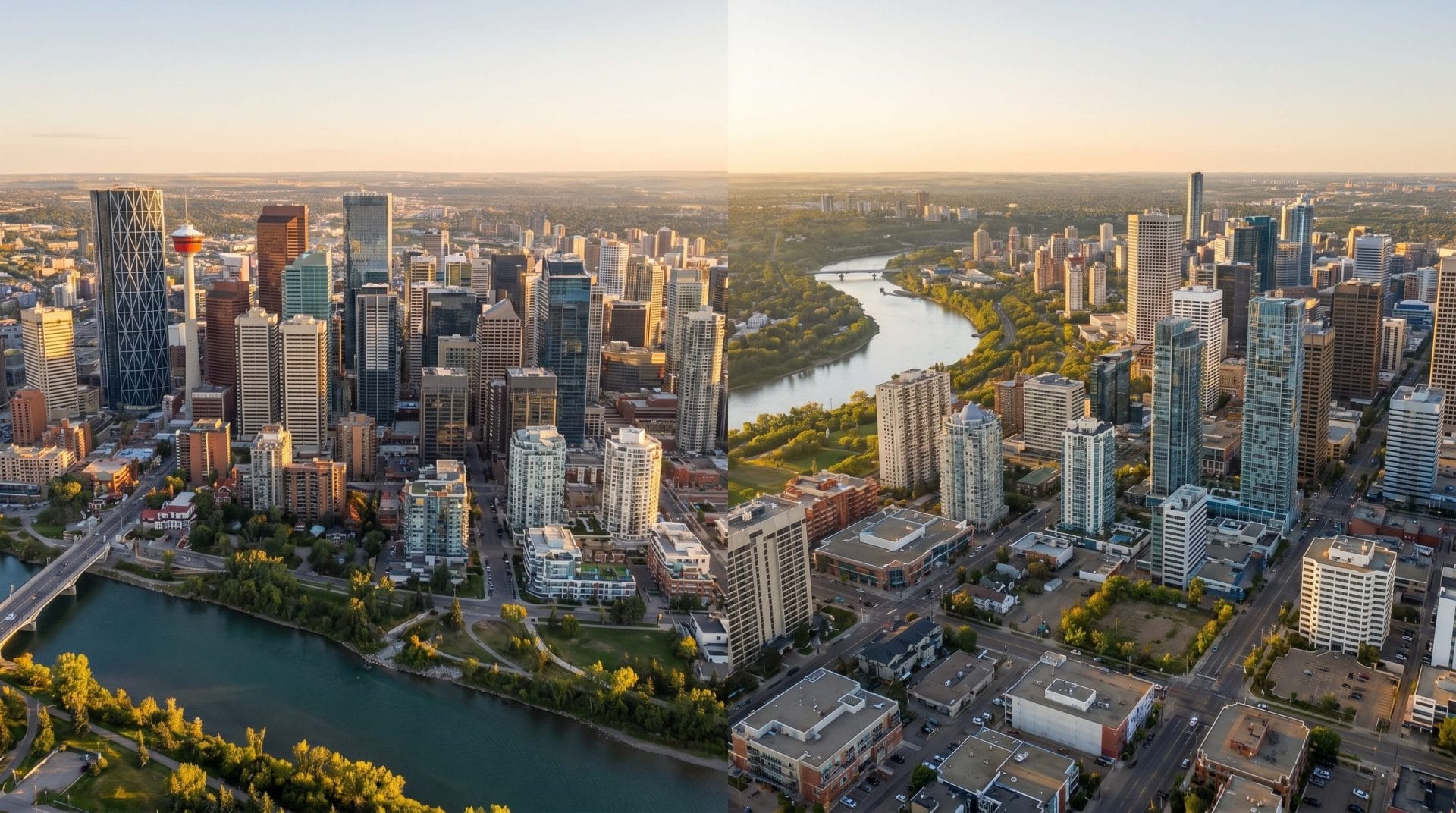
    Alberta’s two biggest cities have been going head-to-head for investors’ dollars for years. In 2026, with interest rates stabilizing and interprovincial migration hitting record highs, the Calgary vs Edmonton debate is more relevant than ever.

    Both cities offer affordability you simply won’t find in Toronto or Vancouver. But they differ significantly in price appreciation, rental demand, job markets, and long-term growth potential. Choosing the wrong city could cost you tens of thousands in missed equity gains — or leave you with a property that sits vacant for months.

    This guide breaks down the real numbers so you can make a confident, data-driven decision on where to put your money in 2026.

    Home Prices: Edmonton Wins on Affordability, Calgary on Appreciation

    The most obvious difference between Calgary and Edmonton real estate is price. According to CREB’s 2026 market data, the average detached home in Calgary sits around $620,000, while Edmonton’s benchmark price hovers near $465,000 — a gap of roughly $155,000.

    That price gap matters for investors. A lower entry point in Edmonton means smaller mortgage payments, better cash flow from day one, and a lower barrier to building a portfolio. If you’re starting out with one or two investment properties, Edmonton stretches your capital further.

    But Calgary’s higher prices come with stronger appreciation. Over the past five years, Calgary home values have outpaced Edmonton’s by an average of 3-4% annually, driven by corporate relocations, a diversifying economy, and population growth that consistently leads the country. If your strategy is long-term equity growth, Calgary’s premium may be worth paying.

    For condos, the pattern holds. Calgary’s average condo price is around $285,000 in 2026, compared to Edmonton’s $195,000. Both cities offer condos as entry-level investment options, but Calgary’s rental demand tends to be stronger, which we’ll cover next.

    Rental Demand and Vacancy Rates: Calgary Tightens, Edmonton Stabilizes

    Rental vacancy rates are a critical metric for any real estate investor. According to CMHC’s 2026 Rental Market Report, Calgary’s vacancy rate has dropped to approximately 1.8%, making it one of the tightest rental markets in Canada. Edmonton’s vacancy rate sits around 4.2% — still healthy, but noticeably more landlord-friendly in Calgary.

    A 1.8% vacancy rate in Calgary means tenants compete for units. Landlords can be selective, rents trend upward, and turnover stays low. For investors relying on rental income to cover mortgage payments, that tightness provides a significant safety net.

    Edmonton’s higher vacancy rate doesn’t mean it’s a bad rental market. It means you may need to price more competitively and budget for slightly longer tenant search periods. The trade-off is that your purchase price is substantially lower, which can still produce solid percentage returns.

    Calgary’s neighbourhoods like Beltline, Kensington, and Bridgeland consistently see the strongest rental demand, particularly among young professionals and newcomers. In Edmonton, areas near the University of Alberta, Whyte Avenue, and the downtown core perform similarly well.

    Job Market and Economic Drivers: Two Different Engines

    Calgary and Edmonton have fundamentally different economic engines, and that directly impacts real estate demand.

    Calgary’s economy has diversified significantly beyond oil and gas. Tech companies, financial services firms, and logistics operations have established major presences in the city. According to Calgary Economic Development, the city added over 40,000 net new jobs in 2025-2026, driven by sectors like technology, renewable energy, and professional services. That job growth fuels housing demand — people need somewhere to live when they relocate for work.

    Edmonton remains more anchored to the public sector, with government, healthcare, and education employing a larger share of the workforce. The city’s oil and gas sector is still significant, and major projects like the Heartland Petrochemical Complex continue to drive industrial employment. Edmonton’s job market is stable but hasn’t seen the same explosive growth as Calgary’s in recent years.

    For real estate investors, Calgary’s diversified economy means broader demand across more neighbourhoods and property types. Edmonton’s stability means less volatility but potentially slower price growth during economic downturns.

    Population Growth: Calgary Leads the Pack

    Statistics Canada data shows Alberta added more interprovincial migrants than any other province in 2025, and Calgary captured the lion’s share. The city’s population is projected to surpass 1.6 million in 2026, up from 1.3 million just five years ago.

    Edmonton is growing too, but at a slower pace. The city’s population is expected to reach approximately 1.15 million in 2026. Both cities are growing, but Calgary’s faster growth translates directly into housing demand.

    This population trend is one of the strongest arguments for Calgary real estate in 2026. More people competing for housing means upward pressure on both prices and rents. Edmonton’s slower growth is still positive, but it doesn’t create the same urgency in the market.

    Infrastructure and Transit: Edmonton’s LRT Expansion vs Calgary’s Green Line

    Infrastructure investment shapes real estate values for decades. Both cities are investing heavily in transit, but the timelines and impacts differ.

    Calgary’s Green Line LRT, one of the largest infrastructure projects in the city’s history, is progressing through construction in 2026. Once complete, it will connect southeast Calgary to the downtown core, opening up neighbourhoods like Seton, Mahogany, and Auburn Bay to faster commutes. Properties along the Green Line corridor are already seeing price premiums as buyers anticipate improved transit access.

    Edmonton’s LRT network is expanding too, with extensions to the Valley Line serving west and south Edmonton. Edmonton’s existing LRT system is more established than Calgary’s, giving current property owners along those lines a proven track record of transit-oriented appreciation.

    For investors, transit expansion is a leading indicator. Buying before a new line is completed — while construction is underway but not yet finished — often captures the best value. Both cities offer this opportunity in 2026.

    Property Taxes: Edmonton’s Higher Rate Eats Into Returns

    One often-overlooked difference is property tax rates. Edmonton’s municipal mill rate is approximately 7.5% higher than Calgary’s in 2026, according to each city’s published tax rates.

    On a $500,000 home, that difference translates to roughly $300-400 per year in additional property taxes in Edmonton. It’s not a dealbreaker, but it does reduce net rental income. When you’re running the numbers on an investment property, Edmonton’s higher tax rate narrows the cash flow advantage you get from the lower purchase price.

    Calgary’s lower property taxes are one more factor that makes the city attractive to investors focused on monthly cash flow. Every dollar saved on taxes is a dollar that stays in your pocket.

    Neighbourhoods to Watch in Both Cities

    In Calgary, neighbourhoods with strong investment potential in 2026 include:

    • Beltline: High rental demand, walkable, young professional demographic
    • Bridgeland: Gentrifying area with strong appreciation potential
    • Seton and Mahogany: Green Line LRT corridor, family-friendly, growing amenities
    • Inglewood: Established character area with steady demand

    In Edmonton, watch these areas:

    • Whyte Avenue/Old Strathcona: Strong rental demand from students and young professionals
    • Downtown: Revitalizing core with new condo developments
    • River Valley areas: Premium locations with limited supply
    • Southgate/Whitemud: Transit-accessible with family appeal

    Each city has neighbourhoods that outperform the city average. Working with a local real estate professional who knows the micro-markets can help you identify the best pockets before they become mainstream.

    The Verdict: Which City Is Right for You?

    There’s no single “better” city for real estate investment in 2026. It depends on your strategy.

    Choose Calgary if: You want stronger price appreciation, tighter rental markets, and a diversified economy driving demand. You’re willing to pay more upfront for potentially higher long-term returns.

    Choose Edmonton if: You want lower entry costs, solid cash flow from day one, and a stable market with less competition. You’re focused on building a portfolio with multiple properties rather than betting on one high-growth asset.

    Many savvy Alberta investors own properties in both cities, capturing the strengths of each market. Diversification across Calgary and Edmonton gives you exposure to different economic drivers and demand cycles.

    The most important thing is to run the actual numbers for your specific situation. Purchase price, rental income, vacancy rates, property taxes, maintenance costs, and financing terms all vary by property. A detailed cash flow analysis — ideally with help from a real estate professional and mortgage broker — will tell you which city offers the better return on your specific investment.

    For informational purposes only. Always consult with a licensed real estate professional before proceeding with any real estate transaction. Market data cited is from publicly available sources including CREB, CMHC, Statistics Canada, and municipal tax records. Individual results may vary.

    Frequently Asked Questions

    Is Calgary or Edmonton better for first-time homebuyers in 2026?

    Edmonton is generally better for first-time homebuyers due to lower purchase prices and smaller down payment requirements. The average home costs roughly $155,000 less than Calgary, making it easier to get into the market. However, Calgary’s stronger job market may offer better long-term earning potential that offsets the higher housing costs.

    Which city has better rental yields, Calgary or Edmonton?

    Edmonton typically offers higher gross rental yields (around 6-8%) because purchase prices are lower relative to rents. Calgary’s gross yields are closer to 4-6%, but the gap narrows when you factor in Calgary’s lower property taxes and tighter vacancy rates. Net returns depend heavily on the specific property and neighbourhood.

    Are Calgary home prices going to keep rising in 2026?

    Most forecasts, including CREB’s 2026 outlook, project continued price growth in Calgary, though at a more moderate pace than the 2023-2024 surge. Population growth, job creation, and limited housing supply all support upward price trends. However, economic shocks or interest rate changes could alter the trajectory.

    Is Edmonton a good place to buy investment property?

    Yes. Edmonton offers affordable entry points, a stable economy, and consistent rental demand. The city’s lower home prices mean better cash flow potential, and neighbourhoods near the U of A, downtown, and along LRT lines provide reliable tenant pools. The key is choosing the right property in the right area.

    What are the main risks of investing in Calgary real estate?

    The main risks include higher purchase prices reducing cash flow, potential oversupply in the condo market, and economic sensitivity to energy sector volatility. Calgary’s market has also seen rapid price increases, which could correct if demand softens. Diversifying across property types and neighbourhoods helps manage these risks.

    Facebook · Instagram · TikTok · YouTube · REALTOR.ca · Google

    Have questions? Get in touch with Sanket Patelcall or text anytime.

    [email protected] · 820 26 St NE, Calgary, AB T2A 2M4

  • Best Retail Spaces for Lease in Calgary NE: 2026 Guide

    Best Retail Spaces for Lease in Calgary NE: 2026 Guide

    Best Retail Spaces for Lease in Calgary NE: 2026 Guide

    Calgary Northeast is one of the most dynamic commercial corridors in the city. With neighbourhoods like Martindale, Saddle Ridge, Castleridge, and Skyview Ranch experiencing rapid population growth, demand for retail space for lease in Calgary NE has never been higher. If you are a small business owner looking to open a shop, restaurant, or service-based business, this guide breaks down everything you need to know about securing the right commercial space in this thriving part of the city.

    For informational purposes only. Always consult with a licensed real estate professional before proceeding with any real estate transaction.

    Why Calgary NE Is a Hotspot for Retail in 2026

    Calgary Northeast has seen some of the fastest residential growth in the metropolitan area over the past five years. According to the City of Calgary’s development tracker, NE communities consistently rank among the top areas for new housing starts. More homes mean more foot traffic, and more foot traffic means more opportunity for retail businesses.

    The area is well-served by major thoroughfares — Metis Trail, Country Hills Boulevard, and Stoney Transitway (the BRT line) connect NE Calgary to the rest of the city. For businesses that rely on visibility and accessibility, these transportation links make retail space for lease in Calgary NE particularly attractive.

    Commercial lease rates in the NE tend to be more competitive than downtown or the trendy 17th Avenue corridor. According to CREB’s commercial market data, average lease rates for retail spaces in Calgary’s northeast quadrant range from $18 to $28 per square foot depending on location, size, and condition — significantly lower than the $35-$50 range you might see in the downtown core.

    Top NE Neighbourhoods for Retail Leasing

    Martindale and Taradale

    Martindale and Taradale are among the most densely populated communities in Calgary NE. With thousands of homes packed into a relatively small geographic area, these neighbourhoods offer strong foot traffic for convenience-oriented retail — think grocery stores, pharmacies, dental clinics, and quick-service restaurants.

    Strip malls along 80 Avenue NE and along the Taradale Drive corridor frequently have vacancies. If you are looking for retail space for lease in Calgary NE on a budget, this area should be on your shortlist.

    Saddle Ridge and Savanna

    Saddle Ridge has exploded in growth since 2020. The community is anchored by the Saddle Ridge Town Centre, a mixed-use development that includes retail, office, and residential units. Lease rates here are slightly higher than Martindale due to newer construction and better finishes, but the trade-off is a more modern shopping environment that attracts higher-income households.

    The Savanna area, just east of Saddle Ridge, is also seeing new commercial developments come online in 2026. Keep an eye on the 68 Street NE corridor for upcoming retail opportunities.

    Castleridge and Falconridge

    Castleridge and Falconridge are established communities with mature commercial nodes. The Westwinds area along Castleridge Boulevard NE has several strip malls and standalone retail units. These spaces tend to be larger and more affordable, making them ideal for businesses that need square footage — furniture stores, fitness centres, or automotive services.

    Skyview Ranch and Redstone

    Skyview Ranch and Redstone are among the newest communities in Calgary NE. Commercial development is still catching up to residential growth, which means there are opportunities to get in early on brand-new retail spaces. If you want a modern storefront with high ceilings, large windows, and energy-efficient systems, these communities are worth exploring.

    Understanding Lease Rates and What Affects Them

    When evaluating retail space for lease in Calgary NE, understanding what drives lease rates will help you negotiate a better deal. Here are the key factors:

    Location within the NE corridor. Spaces near major intersections, transit stops, or anchor tenants (like grocery stores) command higher rents. A unit next to a Save-On-Foods or No Frills will cost more than one on a quieter side street.

    Size and layout. Larger spaces (2,000+ sq ft) often have lower per-square-foot rates than smaller units. Open floor plans are more desirable than choppy, divided spaces because they give tenants flexibility in layout.

    Condition and build-out. A space that is already built out as a retail storefront will cost more in rent than a vanilla shell space. However, you will save on tenant improvement costs. Ask the landlord about TI (tenant improvement) allowances — many commercial landlords in Calgary NE offer $10-$30 per square foot in build-out credits.

    Lease term. Longer leases (5+ years) often come with lower per-square-foot rates because the landlord values the stability. If you are confident in your business plan, locking in a longer term can save you thousands over the life of the lease.

    According to the Business Development Bank of Canada (BDC), the average small business in Canada spends 5-10% of its gross revenue on rent. Keeping your retail lease within this range is critical for long-term profitability.

    Zoning and Permits: What You Need to Calgary NE

    Before signing a lease, verify that the space is zoned for your intended use. The City of Calgary’s Planning and Development website (calgary.ca/pda/pd/home.html) has an interactive zoning map you can use to check the designation of any property.

    Most retail spaces in Calgary NE fall under commercial zoning categories like C-COR1 (Commercial — Corridor 1) or C-C2 (Commercial — Community 2). These zones allow for a wide range of retail and service uses. However, if you are planning a restaurant, medical clinic, or any business that requires special ventilation or waste management, you may need a development permit.

    Here is a quick checklist before committing to a space:

    • Confirm the zoning allows your business type – Check for any development restrictions or caveats on the title – Verify the space meets Alberta building code requirements for your use – Ask about signage bylaws — Calgary has specific rules about sign size and placement – Confirm parking requirements with the landlord and the City of Calgary – Check if the space has separate utility meters (important for budgeting)

    How to Find the Best Retail Listings in Calgary NE

    Finding the right retail space for lease in Calgary NE requires a multi-channel approach. Here are the most effective strategies:

    Work with a commercial REALTOR. A local commercial agent who knows the NE market can give you access to listings before they hit the open market. They also understand the nuances of different neighbourhoods and can match you with spaces that fit your business profile.

    Search online commercial listing platforms. Websites like LoopNet, CREIQ, and CommercialCafe list Calgary NE retail spaces. Set up alerts for new listings so you can act quickly.

    Drive the corridors. Some of the best retail spaces in Calgary NE are leased through simple “For Lease” signs on the building. Drive along 36 Street NE, 52 Street NE, Country Hills Boulevard, and 16 Avenue NE (Trans-Canada Highway) to spot opportunities.

    Network with local business owners. Join the Calgary Chamber of Commerce or the NE Calgary business associations. Other business owners often know about upcoming vacancies before they are publicly listed.

    For a full overview of commercial opportunities across Calgary, visit our commercial real estate Calgary page.

    Negotiating Your Retail Lease: Tips for 2026

    Negotiating a commercial lease is very different from a residential lease. Here are tips specifically for retail tenants in Calgary NE:

    Ask for a rent-free period. Many landlords will offer 1-3 months of free rent to offset your build-out costs. This is especially common in newer developments where the landlord wants to attract tenants quickly.

    Negotiate the annual escalation cap. Most commercial leases include annual rent increases of 2-4%. Try to cap these increases so your costs do not spiral over a long-term lease.

    Get everything in writing. Verbal promises from landlords are not enforceable. Make sure every concession, allowance, and agreement is documented in the lease.

    Understand your CAM charges. Common Area Maintenance (CAM) charges cover shared expenses like snow removal, landscaping, and parking lot maintenance. Ask for a detailed breakdown of CAM charges before signing, and negotiate a cap if possible.

    Review the assignment and subletting clause. If your business outgrows the space or you need to relocate, you want the ability to assign the lease or sublet the space. Make sure the lease allows this with reasonable conditions.

    Financing Your Retail Space

    Securing financing for a retail lease is different from buying commercial property. Most small business owners use a combination of personal savings, small business loans, and government programs to fund their move-in costs.

    The Business Development Bank of Canada (BDC) offers commercial financing specifically for small businesses, including loans for leasehold improvements and equipment purchases. Their rates are competitive, and they are more flexible than traditional banks when it comes to new or growing businesses.

    ATB Financial, Alberta’s own financial institution, also offers business banking products tailored to commercial tenants. Their small business advisors understand the Calgary market and can help you structure a financing plan that works with your lease obligations.

    If you are purchasing a business that comes with an existing lease in Calgary NE, make sure to review the lease terms as part of your due diligence. The lease is a critical asset — or liability — of the business. Check out our guide on business for sale in Calgary for more on evaluating businesses with existing leases.

    Frequently Asked Questions

    What is the average lease rate for retail space in Calgary NE?

    Average lease rates for retail space in Calgary Northeast range from $18 to $28 per square foot, depending on the specific location, size, and condition of the space. Newer developments in Saddle Ridge and Skyview Ranch tend to be at the higher end, while established areas like Castleridge and Falconridge offer more affordable options.

    How much space do I need for a small retail shop?

    Most small retail shops in Calgary NE lease between 800 and 2,000 square feet. A convenience store or small café might only need 500-800 square feet, while a fitness centre or furniture showroom could require 3,000-5,000 square feet. Your space needs depend on your business type, inventory requirements, and customer experience goals.

    Do I need a commercial REALTOR to lease retail space in Calgary?

    While it is not legally required, working with a commercial REALTOR is highly recommended. They have access to off-market listings, understand lease negotiation tactics, and can help you avoid costly mistakes. Most commercial landlords pay the tenant’s agent commission, so there is often no direct cost to you.

    What should I look for in a commercial lease agreement?

    Key items to review include the lease term, rent escalation clauses, CAM charges, tenant improvement allowances, assignment and subletting rights, exclusivity clauses (to prevent competitors from leasing nearby), and termination conditions. Always have a real estate lawyer review the lease before signing.

    Are there incentives for new businesses leasing in Calgary NE?

    Some landlords in newer NE developments offer incentives like rent-free periods, tenant improvement allowances, or reduced rent for the first year. The City of Calgary and the Government of Alberta also offer small business resources and grants that can help offset start-up costs. Check the Alberta small business resources page for current programs.

    Ready to Find Your Retail Space in Calgary NE?

    Calgary Northeast offers some of the best retail leasing opportunities in the city. With growing communities, competitive lease rates, and strong transportation links, it is an ideal location for small businesses ready to establish or expand their presence.

    If you are considering retail space for lease in Calgary NE, contact Sanket Patel for a free consultation. With deep knowledge of the Calgary commercial real estate market and connections to property owners across the city, Sanket can help you find the right space at the right price.

    For more commercial real estate insights, visit our blog hub or explore our commercial real estate Calgary page for the latest market updates.

    Get in touch with Sanket Patel, REALTOR®

    📞 403-918-7080
    🌐 www.patelsanket.ca
    📍 820 26 St NE, Calgary, AB T2A 2M4
    Facebook Instagram TikTok YouTube REALTOR.ca Google

  • Best Retail Spaces for Lease in Calgary NE: 2026 Guide

    Best Retail Spaces for Lease in Calgary NE: 2026 Guide

    Best Retail Spaces for Lease in Calgary NE: 2026 Guide

    Calgary Northeast is one of the most dynamic commercial corridors in the city. With neighbourhoods like Martindale, Saddle Ridge, Castleridge, and Skyview Ranch experiencing rapid population growth, demand for retail space for lease in Calgary NE has never been higher. If you are a small business owner looking to open a shop, restaurant, or service-based business, this guide breaks down everything you need to know about securing the right commercial space in this thriving part of the city.

    For informational purposes only. Always consult with a licensed real estate professional before proceeding with any real estate transaction.

    Why Calgary NE Is a Hotspot for Retail in 2026

    Calgary Northeast has seen some of the fastest residential growth in the metropolitan area over the past five years. According to the City of Calgary’s development tracker, NE communities consistently rank among the top areas for new housing starts. More homes mean more foot traffic, and more foot traffic means more opportunity for retail businesses.

    The area is well-served by major thoroughfares — Metis Trail, Country Hills Boulevard, and Stoney Transitway (the BRT line) connect NE Calgary to the rest of the city. For businesses that rely on visibility and accessibility, these transportation links make retail space for lease in Calgary NE particularly attractive.

    Commercial lease rates in the NE tend to be more competitive than downtown or the trendy 17th Avenue corridor. According to CREB’s commercial market data, average lease rates for retail spaces in Calgary’s northeast quadrant range from $18 to $28 per square foot depending on location, size, and condition — significantly lower than the $35-$50 range you might see in the downtown core.

    Top NE Neighbourhoods for Retail Leasing

    Martindale and Taradale

    Martindale and Taradale are among the most densely populated communities in Calgary NE. With thousands of homes packed into a relatively small geographic area, these neighbourhoods offer strong foot traffic for convenience-oriented retail — think grocery stores, pharmacies, dental clinics, and quick-service restaurants.

    Strip malls along 80 Avenue NE and along the Taradale Drive corridor frequently have vacancies. If you are looking for retail space for lease in Calgary NE on a budget, this area should be on your shortlist.

    Saddle Ridge and Savanna

    Saddle Ridge has exploded in growth since 2020. The community is anchored by the Saddle Ridge Town Centre, a mixed-use development that includes retail, office, and residential units. Lease rates here are slightly higher than Martindale due to newer construction and better finishes, but the trade-off is a more modern shopping environment that attracts higher-income households.

    The Savanna area, just east of Saddle Ridge, is also seeing new commercial developments come online in 2026. Keep an eye on the 68 Street NE corridor for upcoming retail opportunities.

    Castleridge and Falconridge

    Castleridge and Falconridge are established communities with mature commercial nodes. The Westwinds area along Castleridge Boulevard NE has several strip malls and standalone retail units. These spaces tend to be larger and more affordable, making them ideal for businesses that need square footage — furniture stores, fitness centres, or automotive services.

    Skyview Ranch and Redstone

    Skyview Ranch and Redstone are among the newest communities in Calgary NE. Commercial development is still catching up to residential growth, which means there are opportunities to get in early on brand-new retail spaces. If you want a modern storefront with high ceilings, large windows, and energy-efficient systems, these communities are worth exploring.

    Understanding Lease Rates and What Affects Them

    When evaluating retail space for lease in Calgary NE, understanding what drives lease rates will help you negotiate a better deal. Here are the key factors:

    Location within the NE corridor. Spaces near major intersections, transit stops, or anchor tenants (like grocery stores) command higher rents. A unit next to a Save-On-Foods or No Frills will cost more than one on a quieter side street.

    Size and layout. Larger spaces (2,000+ sq ft) often have lower per-square-foot rates than smaller units. Open floor plans are more desirable than choppy, divided spaces because they give tenants flexibility in layout.

    Condition and build-out. A space that is already built out as a retail storefront will cost more in rent than a vanilla shell space. However, you will save on tenant improvement costs. Ask the landlord about TI (tenant improvement) allowances — many commercial landlords in Calgary NE offer $10-$30 per square foot in build-out credits.

    Lease term. Longer leases (5+ years) often come with lower per-square-foot rates because the landlord values the stability. If you are confident in your business plan, locking in a longer term can save you thousands over the life of the lease.

    According to the Business Development Bank of Canada (BDC), the average small business in Canada spends 5-10% of its gross revenue on rent. Keeping your retail lease within this range is critical for long-term profitability.

    Zoning and Permits: What You Need to Calgary NE

    Before signing a lease, verify that the space is zoned for your intended use. The City of Calgary’s Planning and Development website (calgary.ca/pda/pd/home.html) has an interactive zoning map you can use to check the designation of any property.

    Most retail spaces in Calgary NE fall under commercial zoning categories like C-COR1 (Commercial — Corridor 1) or C-C2 (Commercial — Community 2). These zones allow for a wide range of retail and service uses. However, if you are planning a restaurant, medical clinic, or any business that requires special ventilation or waste management, you may need a development permit.

    Here is a quick checklist before committing to a space:

    • Confirm the zoning allows your business type
    • Check for any development restrictions or caveats on the title
    • Verify the space meets Alberta building code requirements for your use
    • Ask about signage bylaws — Calgary has specific rules about sign size and placement
    • Confirm parking requirements with the landlord and the City of Calgary
    • Check if the space has separate utility meters (important for budgeting)

    How to Find the Best Retail Listings in Calgary NE

    Finding the right retail space for lease in Calgary NE requires a multi-channel approach. Here are the most effective strategies:

    Work with a commercial REALTOR. A local commercial agent who knows the NE market can give you access to listings before they hit the open market. They also understand the nuances of different neighbourhoods and can match you with spaces that fit your business profile.

    Search online commercial listing platforms. Websites like LoopNet, CREIQ, and CommercialCafe list Calgary NE retail spaces. Set up alerts for new listings so you can act quickly.

    Drive the corridors. Some of the best retail spaces in Calgary NE are leased through simple “For Lease” signs on the building. Drive along 36 Street NE, 52 Street NE, Country Hills Boulevard, and 16 Avenue NE (Trans-Canada Highway) to spot opportunities.

    Network with local business owners. Join the Calgary Chamber of Commerce or the NE Calgary business associations. Other business owners often know about upcoming vacancies before they are publicly listed.

    For a full overview of commercial opportunities across Calgary, visit our commercial real estate Calgary page.

    Negotiating Your Retail Lease: Tips for 2026

    Negotiating a commercial lease is very different from a residential lease. Here are tips specifically for retail tenants in Calgary NE:

    Ask for a rent-free period. Many landlords will offer 1-3 months of free rent to offset your build-out costs. This is especially common in newer developments where the landlord wants to attract tenants quickly.

    Negotiate the annual escalation cap. Most commercial leases include annual rent increases of 2-4%. Try to cap these increases so your costs do not spiral over a long-term lease.

    Get everything in writing. Verbal promises from landlords are not enforceable. Make sure every concession, allowance, and agreement is documented in the lease.

    Understand your CAM charges. Common Area Maintenance (CAM) charges cover shared expenses like snow removal, landscaping, and parking lot maintenance. Ask for a detailed breakdown of CAM charges before signing, and negotiate a cap if possible.

    Review the assignment and subletting clause. If your business outgrows the space or you need to relocate, you want the ability to assign the lease or sublet the space. Make sure the lease allows this with reasonable conditions.

    Financing Your Retail Space

    Securing financing for a retail lease is different from buying commercial property. Most small business owners use a combination of personal savings, small business loans, and government programs to fund their move-in costs.

    The Business Development Bank of Canada (BDC) offers commercial financing specifically for small businesses, including loans for leasehold improvements and equipment purchases. Their rates are competitive, and they are more flexible than traditional banks when it comes to new or growing businesses.

    ATB Financial, Alberta’s own financial institution, also offers business banking products tailored to commercial tenants. Their small business advisors understand the Calgary market and can help you structure a financing plan that works with your lease obligations.

    If you are purchasing a business that comes with an existing lease in Calgary NE, make sure to review the lease terms as part of your due diligence. The lease is a critical asset — or liability — of the business. Check out our guide on business for sale in Calgary for more on evaluating businesses with existing leases.

    Frequently Asked Questions

    What is the average lease rate for retail space in Calgary NE?

    Average lease rates for retail space in Calgary Northeast range from $18 to $28 per square foot, depending on the specific location, size, and condition of the space. Newer developments in Saddle Ridge and Skyview Ranch tend to be at the higher end, while established areas like Castleridge and Falconridge offer more affordable options.

    How much space do I need for a small retail shop?

    Most small retail shops in Calgary NE lease between 800 and 2,000 square feet. A convenience store or small café might only need 500-800 square feet, while a fitness centre or furniture showroom could require 3,000-5,000 square feet. Your space needs depend on your business type, inventory requirements, and customer experience goals.

    Do I need a commercial REALTOR to lease retail space in Calgary?

    While it is not legally required, working with a commercial REALTOR is highly recommended. They have access to off-market listings, understand lease negotiation tactics, and can help you avoid costly mistakes. Most commercial landlords pay the tenant’s agent commission, so there is often no direct cost to you.

    What should I look for in a commercial lease agreement?

    Key items to review include the lease term, rent escalation clauses, CAM charges, tenant improvement allowances, assignment and subletting rights, exclusivity clauses (to prevent competitors from leasing nearby), and termination conditions. Always have a real estate lawyer review the lease before signing.

    Are there incentives for new businesses leasing in Calgary NE?

    Some landlords in newer NE developments offer incentives like rent-free periods, tenant improvement allowances, or reduced rent for the first year. The City of Calgary and the Government of Alberta also offer small business resources and grants that can help offset start-up costs. Check the Alberta small business resources page for current programs.

    Ready to Find Your Retail Space in Calgary NE?

    Calgary Northeast offers some of the best retail leasing opportunities in the city. With growing communities, competitive lease rates, and strong transportation links, it is an ideal location for small businesses ready to establish or expand their presence.

    If you are considering retail space for lease in Calgary NE, contact Sanket Patel for a free consultation. With deep knowledge of the Calgary commercial real estate market and connections to property owners across the city, Sanket can help you find the right space at the right price.

    For more commercial real estate insights, visit our blog hub or explore our commercial real estate Calgary page for the latest market updates.

    Facebook · Instagram · TikTok · YouTube · REALTOR.ca · Google

    Have questions about Calgary real estate? Get in touch with Sanket Patelcall or text anytime.

    [email protected] · 820 26 St NE, Calgary, AB T2A 2M4