
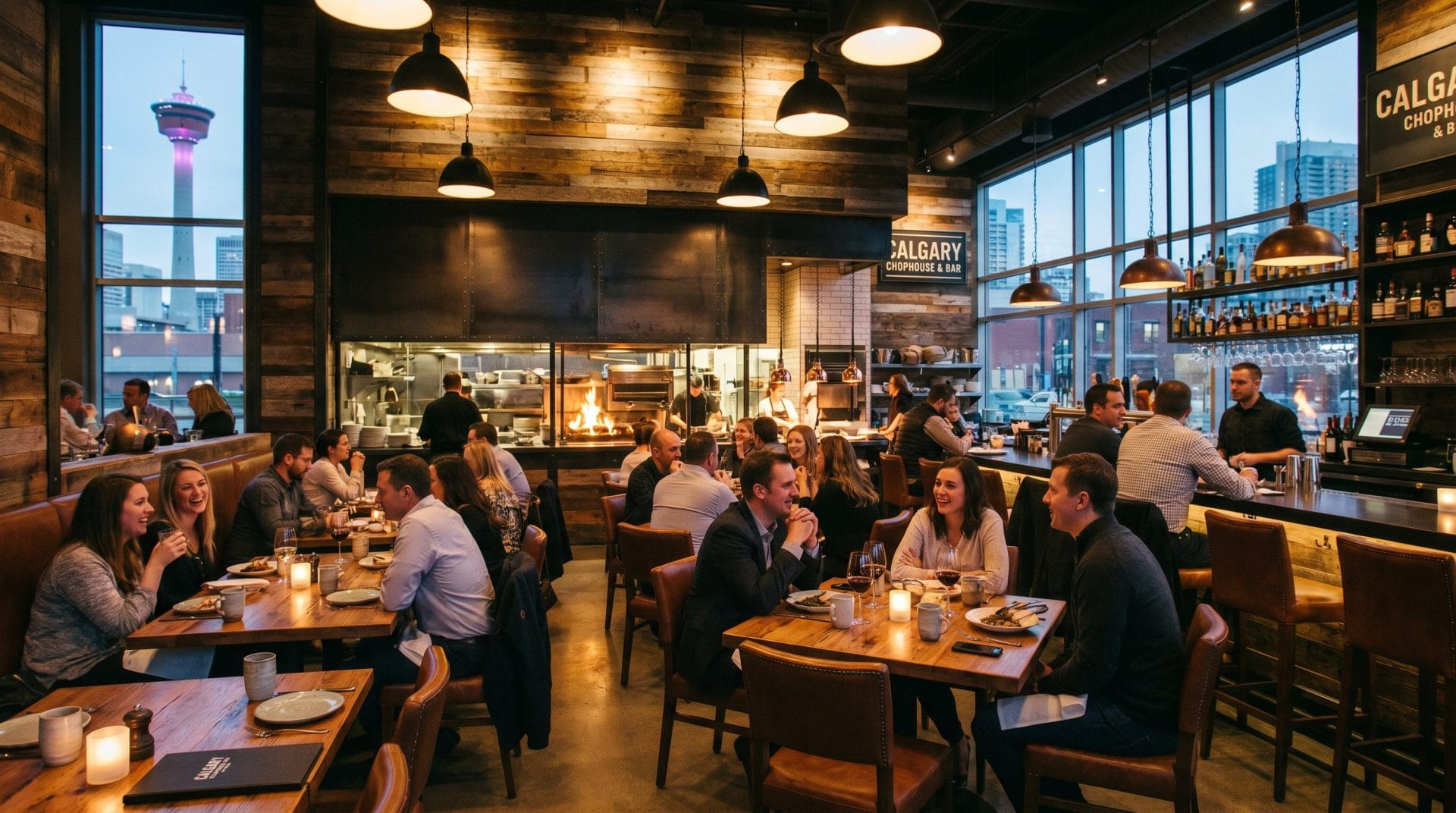
Restaurant for Sale in Calgary: What to Look For
Calgary’s restaurant scene is one of the most dynamic in Canada. From bustling downtown bistros to neighbourhood family restaurants, the city offers a rich diversity of culinary opportunities. If you’re considering purchasing a restaurant for sale in Calgary, you’re entering a market with tremendous potential — but also significant risks. Restaurants are among the most complex businesses to acquire because they combine real estate, equipment, inventory, labour management, food safety, and customer experience into one operation.
This comprehensive guide walks you through exactly what to look for when evaluating a restaurant for sale in Calgary, from financial analysis to lease review, kitchen inspection to location assessment.
Why Buy a Restaurant in Calgary?
Calgary’s food and beverage industry continues to grow, driven by a strong economy, population growth, and a vibrant culinary culture. Several factors make Calgary an attractive market for restaurant buyers:
- Population growth — Calgary is one of Canada’s fastest-growing cities, creating steady demand for dining options
- Strong economy — Alberta’s favourable tax environment and economic diversification support consumer spending
- Tourism and events — the Calgary Stampede, festivals, and corporate events drive significant restaurant traffic
- Culinary diversity — demand spans from fast casual to fine dining, ethnic cuisine to farm-to-table concepts
- Realistic valuations — compared to Toronto or Vancouver, Calgary restaurant valuations remain more reasonable
Whether you’re looking for a restaurant for sale in Calgary as a first-time buyer or an experienced operator, understanding the key evaluation criteria is essential to making a sound investment.
The Calgary Restaurant Landscape in 2026
Before diving into specific evaluation criteria, it’s important to understand the current state of Calgary’s restaurant market.
Market Trends
- Post-pandemic stabilization — Calgary restaurants have largely recovered and stabilized, with many operators reporting stronger revenues than pre-2020 levels
- Labour market challenges — skilled kitchen and service staff remain competitive, making employee retention a critical factor
- Delivery and takeout integration — successful restaurants now operate seamless online ordering and third-party delivery systems
- Rising food costs — inflationary pressure on ingredients requires careful menu engineering and supplier relationships
- Experience economy — diners increasingly seek unique experiences, favouring restaurants with distinctive concepts and atmospheres
Popular Restaurant Types in Calgary
Different restaurant concepts command different valuations and appeal to different buyer profiles:
- Casual dining — family restaurants, pubs, and neighbourhood spots; typically valued at 1.5x–2.5x SDE
- Fast casual / QSR — quick service restaurants with streamlined operations; 2x–3x SDE
- Fine dining — higher margins but greater operational complexity; 2x–3.5x SDE
- Coffee shops and cafes — lower entry price, lifestyle-oriented; 1.5x–2.5x SDE
- Ethnic cuisine — strong niche markets, often family-run; 1.5x–2x SDE
The Calgary Economic Development website provides excellent data on local consumer spending trends that can help validate market demand for your target restaurant concept.
Location Analysis: The #1 Factor
In the restaurant business, location is everything. When evaluating a restaurant for sale in Calgary, the location will determine your customer base, operating hours, delivery radius, and long-term viability.
Key Location Factors
- Foot traffic and visibility — is the restaurant on a main thoroughfare or hidden in a strip mall? Count pedestrian traffic during peak hours
- Parking — Calgary is a car-dependent city. Adequate free or validated parking is crucial for most restaurant concepts
- Neighbourhood demographics — does the surrounding population match the restaurant’s target customer profile?
- Nearby competition — how many similar restaurants operate within a 1km radius? Too much competition can cap revenue potential
- Complementary businesses — proximity to offices, hotels, entertainment venues, and retail can drive consistent traffic
- Transit access — CTrain stations and bus routes bring lunch and after-work crowds
Calgary’s Top Restaurant Neighbourhoods
Different areas of Calgary offer distinct advantages:
- Downtown Core — weekday lunch crowds, after-work dining, event traffic; higher rent but higher volume
- 17th Avenue SW — Calgary’s entertainment district, strong evening and weekend traffic, high visibility
- Kensington — trendy neighbourhood, strong local support, foot traffic from nearby residents
- Inglewood — Calgary’s oldest neighbourhood, boutique shopping traffic, unique character
- Marda Loop — family-oriented, strong local community support, growing food scene
- Stephen Avenue — pedestrian-only downtown core, tourist traffic, event-driven crowds
- Suburban hubs — neighbourhoods like Shawnessy, Country Hills, and McKenzie Towne offer family dining opportunities
Before committing, spend several days observing the location at different times. A Calgary business broker with restaurant expertise can help you evaluate location data and traffic patterns.
Financial Due Diligence
Restaurant financials can be complicated. Many restaurant owners commingle personal and business expenses, and cash transactions can make revenue verification challenging. Here’s what to scrutinize:
Revenue Verification
- Review at least 3 years of tax returns and financial statements
- Compare reported revenue to credit card processing statements (these are the most reliable data point)
- Assess Point of Sale (POS) system reports for transaction counts and average ticket size
- Look for seasonal patterns — Calgary restaurants often see summer highs and January lows
- Verify online ordering and delivery platform revenue (Uber Eats, SkipTheDishes, DoorDash reports)
Expense Analysis
- Cost of Goods Sold (COGS) — industry target is 28–35% of revenue; verify against supplier invoices
- Labour costs — target 25–35% of revenue; review payroll records, tip pools, and management salaries
- Occupancy costs — rent plus CAM should ideally not exceed 10–15% of revenue
- Utilities — restaurant utility costs can be significant; request 12 months of bills
- Repairs and maintenance — kitchen equipment requires ongoing maintenance; review service records
- Marketing and advertising — does the current owner actively market, or is the business coasting on reputation?
Seller’s Discretionary Earnings (SDE)
For most independently owned restaurants, SDE is the most relevant valuation metric. It represents the total financial benefit the owner receives, including salary, perks, and non-essential expenses. Ask the seller for a detailed SDE recast that shows:
- Net profit as reported
- Owner’s salary and benefits
- Discretionary expenses (personal vehicles, travel, meals, entertainment)
- Non-recurring expenses (one-time repairs, legal fees, consulting)
- Depreciation and amortization
- Interest expense
The BDC’s business valuation guide offers additional context on how SDE factors into restaurant valuations.
Lease Review: The Most Critical Document
The lease can make or break a restaurant acquisition. A restaurant lease is fundamentally different from a standard commercial lease and requires careful review.
Key Lease Terms to Evaluate
- Remaining term — the lease should have at least 5–7 years remaining, plus renewal options. A short lease dramatically reduces business value
- Triple Net (NNN) expenses — understand exactly what’s included. CAM, property tax, insurance, and utilities can add 20–40% to base rent
- Assignment clause — can the lease be transferred to you? Does the landlord need to approve? What conditions apply?
- Use clause — does the lease restrict what type of restaurant you can operate? Can you change the concept?
- Rent escalation — what is the annual rent increase? Percentage-based or CPI-indexed?
- Tenant improvements — who is responsible for maintaining kitchen ventilation, grease traps, and exhaust systems?
- Common area maintenance — review CAM charges carefully; these can increase unpredictably
Always have a commercial real estate lawyer review the lease before signing any purchase agreement. The lease obligations directly impact your cost structure and long-term profitability.
Kitchen and Equipment Inspection
Restaurant equipment is expensive to replace. A thorough inspection is essential before purchasing a restaurant for sale in Calgary.
Equipment Checklist
- Commercial kitchen equipment — ovens, ranges, fryers, grills, refrigerators, freezers, ice machines. Check age, condition, maintenance records
- Ventilation and exhaust — hood systems must meet fire code and Alberta Health Services standards. Cleaning records should be available
- Plumbing and grease traps — Calgary requires properly maintained grease interceptors. Check for backups or recurring issues
- Fire suppression systems — kitchen fire suppression (Ansul) systems require annual inspection and recertification
- Walk-in coolers and freezers — these are major capital items. Verify age and condition of compressors
- POS system — is it modern and functional? Older systems may need replacement
- Dining room furniture and decor — while replaceable, refurbishing costs should be factored into your budget
Health Inspection History
In Calgary, restaurant health inspections are conducted by Alberta Health Services (AHS). Request the restaurant’s complete inspection history:
- Recent inspection reports with violation details
- Any critical or non-critical infractions and their resolution
- Re-inspection patterns (frequent follow-ups may indicate systemic issues)
- Food handling certification of current staff
Inspections are public record. You can verify a restaurant’s history through Alberta Health Services. A history of critical violations is a significant red flag that may require operational changes and investment.
Licenses, Permits, and Regulatory Compliance
Calgary restaurants require multiple licenses and permits. Verify that all are current and transferable:
- Business license — Calgary business license for food service establishments
- Food handling permit — issued by Alberta Health Services
- Liquor license — AGLC liquor license (if applicable). This is a valuable asset that must be transferred separately
- Music and entertainment licenses — SOCAN, Re:Sound, and possibly city entertainment permits
- Gaming licenses — VLT or Keno licenses if applicable
- Signage permits — ensure existing signage is permitted by the City of Calgary
- Building and fire code compliance — occupancy permits and fire inspection certificates
Liquor licenses are particularly valuable and can take months to transfer. Confirm the current owner’s license type and start the transfer process early. The Alberta Gaming, Liquor and Cannabis (AGLC) website provides detailed information on license transfers.
Staff Evaluation
In Calgary’s competitive labour market, a restaurant’s staff is one of its most valuable assets. Evaluate:
- Key personnel — will the head chef, manager, or key servers stay after the sale?
- Employment agreements — are there written contracts? Non-compete or non-solicitation clauses?
- Wage structure — understand current wage rates, tip policies, and any pending wage increases
- Staff turnover — high turnover is a red flag for management or culture issues
- Training systems — are there documented recipes, procedures, and training materials?
- Employee morale — discreetly gauge staff satisfaction during site visits
Reputation and Online Presence
A restaurant’s reputation is a fragile but critical asset. Before buying:
- Online reviews — analyze Google, Yelp, TripAdvisor, and social media ratings. Look for patterns in complaints
- Social media following — an engaged Instagram, Facebook, or TikTok following has real value
- Word of mouth — ask neighbours, suppliers, and regular customers about the restaurant’s reputation
- Catering and event business — many Calgary restaurants generate significant revenue from off-site catering and private events
- News coverage — has the restaurant been featured in local media? Positive press adds credibility
Supplier Relationships
Restaurant success depends on reliable supply chains. Review:
- Current supplier contracts and pricing
- Payment terms and credit history
- Supplier reliability (on-time delivery, quality consistency)
- Are there exclusive supplier arrangements?
- Can supplier accounts be transferred to you?
Key suppliers for Calgary restaurants include GFS (Gordon Food Service), Sysco, and local producers. Strong supplier relationships can provide better pricing and service than starting from scratch.
Red Flags to Watch For
- Declining revenue trend — revenue dropping year-over-year without a clear explanation
- Owner unwilling to share financials — lack of transparency is the biggest red flag
- Deferred maintenance — worn equipment, peeling paint, dirty kitchen indicate neglect
- Lease expiration within 3 years — without renewal options, the business may have little transferable value
- Pending health violations — unresolved food safety issues that could force closure
- Legal disputes — ongoing litigation with suppliers, employees, or the landlord
- Unrealistic asking price — the seller values the business based on emotion rather than market data
- Key person dependence — the restaurant relies entirely on the owner’s personal relationships and presence
Financing Options for Restaurant Buyers
Financing a restaurant purchase in Calgary typically involves a combination of sources:
- Vendor take-back financing — the seller holds a portion of the purchase price as a loan, often 20–40%
- Bank loans — chartered banks and credit unions offer business acquisition loans with 15–30% down payment
- BDC loans — the Business Development Bank of Canada provides financing for business acquisitions
- ATB Financial — Alberta-based bank with strong business lending programs for restaurant acquisitions
- Private investors — silent partners or investment groups
- Home equity — leveraging personal real estate equity is common among first-time restaurant buyers
The Due Diligence Checklist
Before closing on any restaurant for sale in Calgary, complete this checklist:
- 3+ years of tax returns and financial statements reviewed by an accountant
- Credit card processing statements verified
- POS system reports analyzed
- Lease reviewed by a commercial real estate lawyer
- Kitchen and equipment inspected by a qualified technician
- Health inspection history reviewed
- All licenses and permits verified as transferable
- Liquor license transfer initiated (if applicable)
- Supplier agreements reviewed
- Staff employment terms understood
- Online reputation assessment completed
- Competitive market analysis performed
- Financing pre-approved
FAQ
How much does a restaurant for sale in Calgary cost?
Restaurant prices in Calgary vary widely based on size, location, revenue, and concept. Small cafes and takeout spots may start around $50,000–$100,000, while established full-service restaurants with liquor licenses typically range from $150,000 to $500,000 or more.
Can I change the concept of a restaurant I buy?
It depends on the lease’s use clause and your liquor license. Some leases restrict the type of food service permitted. Changing concepts may require landlord approval, new permits, and significant investment.
Is it better to buy a restaurant or start one from scratch?
Buying an existing restaurant offers immediate cash flow, an established customer base, existing staff, and operational systems. Startups offer complete creative control but face the highest failure rate. For most buyers, acquisition is the lower-risk path.
Do I need restaurant experience to buy a restaurant?
While not strictly required, restaurant experience significantly improves your odds of success. First-time buyers should strongly consider a management transition period (60–90 days) with the seller and hiring an experienced general manager.
How long does it take to close on a restaurant purchase?
Typically 60–90 days from accepted offer to closing. The liquor license transfer can add additional time, so it’s important to start that process immediately.
Final Thoughts
Buying a restaurant in Calgary is an exciting opportunity, but it requires careful due diligence and a clear understanding of what you’re getting into. By following this guide and working with experienced professionals — including a business broker, accountant, and lawyer — you can identify a quality restaurant for sale in Calgary that meets your goals and avoids costly pitfalls.
If you’re ready to explore restaurants currently on the market, contact Sanket Patel for expert guidance on finding and evaluating Calgary restaurant opportunities.
Get in Touch with Sanket Patel, REALTOR®
Phone: 403-918-7080
Website: www.patelsanket.ca
Address: 820 26 St NE, Calgary, AB T2A 2M4
Social: Facebook, Instagram, TikTok, YouTube
Disclaimer: This article provides general information for educational purposes and does not constitute professional advice. Always consult qualified professionals regarding your specific situation. Information is accurate as of the publication date but may be subject to change.