
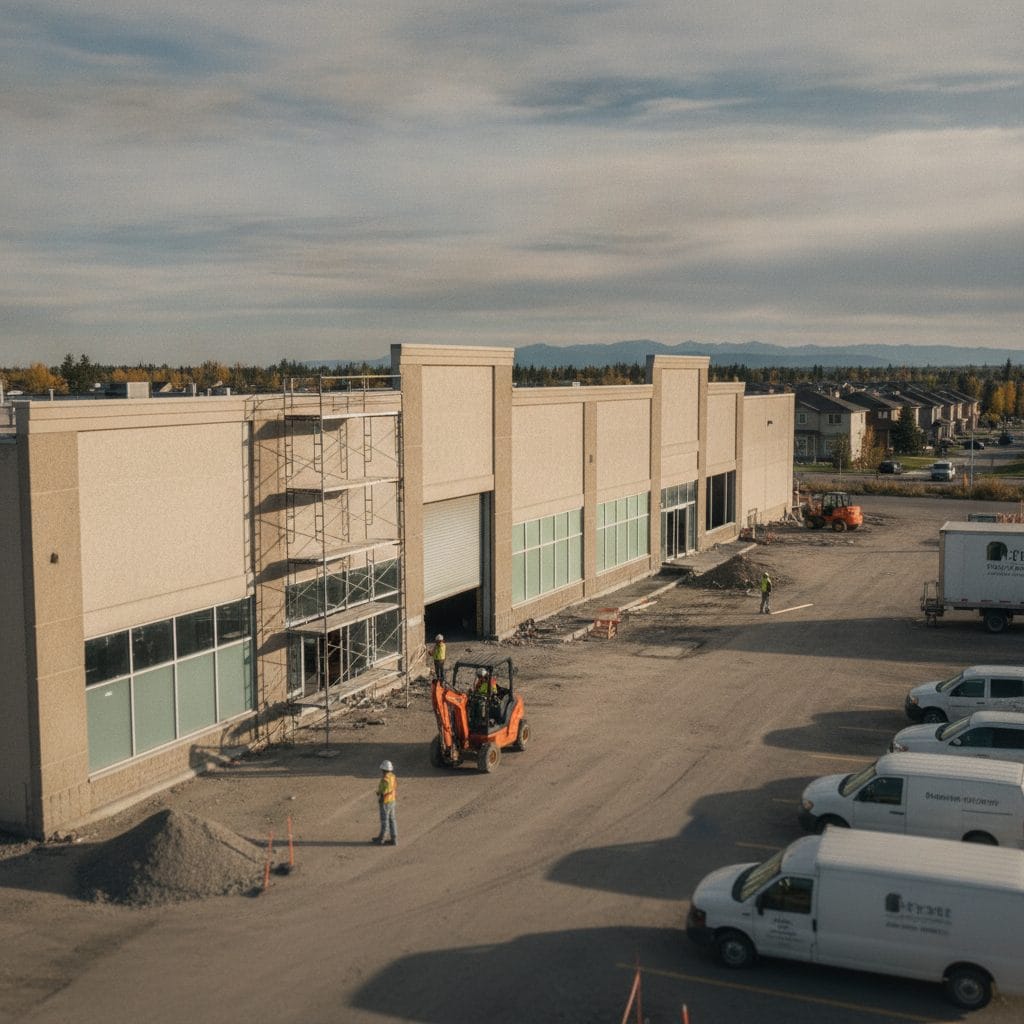
[META]: Explore Chestermere’s 2026 vacant retail to industrial conversion incentive: unlocking hidden adaptive reuse opportunities.
For astute investors and forward-thinking businesses in Chestermere, an emerging opportunity is on the horizon, promising to redefine underutilized commercial spaces. The Chestermere vacant retail industrial conversion 2026 initiative is set to unlock significant potential for adaptive reuse, transforming struggling retail locations into vibrant industrial hubs. This unique program, slated for 2026, represents a strategic move by Chestermere to foster economic diversification and attract new business investment by incentivizing the conversion of vacant retail properties into much-needed industrial facilities. Understanding the nuances of this incentive and the broader implications of such conversions is crucial for anyone looking to capitalize on this transformative trend in Chestermere’s commercial landscape.
Understanding the Chestermere Vacant Retail to Industrial Conversion Incentive 2026
The Chestermere vacant retail industrial conversion 2026 program is designed to address a dual challenge: the increasing number of vacant retail storefronts and the growing demand for industrial space within Chestermere and the surrounding Alberta region. As e-commerce continues to reshape consumer habits, traditional retail models have faced significant headwinds, leading to a surplus of underperforming or empty retail properties. Simultaneously, Chestermere’s strategic location and growth trajectory have spurred demand for logistics, light manufacturing, warehousing, and service-based industrial operations. This incentive aims to bridge this gap by offering financial and regulatory advantages to property owners and developers willing to undertake the conversion process.
Key Features of the Incentive Program
While specific details are still being finalized for the 2026 launch, the core of the incentive is expected to revolve around streamlined permitting processes and potential tax abatements or grants. The goal is to significantly reduce the financial and bureaucratic hurdles associated with repurposing commercial real estate. For instance, properties previously zoned for retail might require rezoning or a development permit amendment to accommodate industrial uses. The incentive program aims to expedite these approvals, making the conversion timeline more predictable and cost-effective. Furthermore, there may be provisions for grants or rebates to offset the costs of structural modifications, specialized equipment installation, or necessary infrastructure upgrades required for industrial operations.
Eligibility Criteria and Property Types
Eligibility for the Chestermere vacant retail industrial conversion 2026 incentive will likely focus on properties that are demonstrably vacant or underutilized within designated commercial zones. The program is specifically targeting retail spaces, including former big-box stores, strip malls, or standalone retail buildings. These spaces often possess characteristics that lend themselves to industrial conversion, such as ample floor space, large parking areas that can be repurposed for loading docks or outdoor storage, and existing utility infrastructure. The specific zoning and location within Chestermere will play a critical role in determining suitability, with a focus on areas that can integrate industrial activity without negatively impacting residential neighbourhoods.
The Strategic Advantages of Retail-to-Industrial Conversions in Chestermere
The conversion of vacant retail spaces into industrial properties in Chestermere offers a compelling set of strategic advantages, moving beyond just addressing vacancy rates. This adaptive reuse strategy can revitalize commercial corridors, create new employment opportunities, and diversify Chestermere’s economic base. For businesses seeking operational space, these converted properties can provide unique benefits, such as prime locations with existing access to transportation networks, which are often lacking in newer, out-of-town industrial parks. The incentive program for Chestermere vacant retail industrial conversion 2026 is a proactive step by the city to foster this economic evolution.
Economic Diversification and Job Creation
Chestermere has been rapidly growing, and like many expanding municipalities, it benefits from a diverse economic landscape. Transitioning vacant retail properties to industrial use can introduce a range of new businesses, from light manufacturing and assembly to logistics, e-commerce fulfillment centres, and trade services. These industries often provide stable, well-paying jobs, contributing to the local economy and reducing reliance on single sectors. By facilitating the Chestermere vacant retail industrial conversion 2026, the city is actively encouraging the growth of sectors that can absorb these commercial spaces and create sustainable employment for its residents.
Repurposing Underutilized Infrastructure
Many vacant retail buildings in Chestermere are situated in established commercial areas with robust infrastructure. This includes access to power, water, sewer, and telecommunications, as well as proximity to major roadways for efficient logistics. Converting these spaces into industrial facilities leverages this existing investment, avoiding the significant costs and environmental impact associated with developing greenfield industrial sites. The large footprints of former retail stores can be particularly advantageous for businesses requiring significant operational space, warehousing, or specialized equipment. This approach makes smart use of Chestermere’s existing urban fabric.
Navigating the Conversion Process: Due Diligence and Planning
Embarking on a retail-to-industrial conversion, especially under the framework of the Chestermere vacant retail industrial conversion 2026 incentive, requires meticulous planning and thorough due diligence. While the incentive aims to streamline the process, property owners and potential buyers must still conduct comprehensive assessments to ensure feasibility and profitability. This includes understanding zoning regulations, structural integrity, environmental considerations, and the specific needs of prospective industrial tenants.
Assessing Property Suitability for Industrial Use
Before committing to a conversion, a detailed site assessment is paramount. This involves evaluating the existing structure’s load-bearing capacity, ceiling heights, and the potential for modifications like adding loading docks or drive-in doors. For industrial applications, factors such as adequate power supply, ventilation, and floor strength are critical. For instance, a former department store might have spacious interiors but may require significant reinforcement for heavy machinery or warehousing. Identifying potential environmental contaminants from previous retail operations is also a crucial step in the due diligence process for any Chestermere vacant retail industrial conversion 2026 project.
Understanding Zoning and Permitting Requirements
Even with the incentive program, navigating Chestermere’s zoning bylaws and securing the necessary development permits will be a key component of the conversion process. Industrial uses have specific requirements regarding setbacks, noise levels, traffic flow, and integration with surrounding land uses. Understanding which industrial categories are permitted under the incentive and within the specific zones of vacant retail properties is essential. Consulting with Chestermere’s planning department early in the process can provide clarity on the specific requirements and how the Chestermere vacant retail industrial conversion 2026 initiative might offer pathways to approval for your project.
Investment Opportunities in Chestermere’s Adaptive Reuse Market
The Chestermere vacant retail industrial conversion 2026 incentive presents a compelling investment thesis for commercial real estate players and business owners looking for unique opportunities. By transforming obsolescent retail assets into functional industrial spaces, investors can tap into a growing market demand while contributing to Chestermere’s economic vitality. This proactive approach to urban development positions Chestermere as an attractive location for businesses seeking operational efficiency and strategic positioning within Alberta.
Identifying Prime Conversion Candidates
When evaluating potential investment properties, focus on retail locations that possess inherent advantages for industrial conversion. These include sites with large land parcels offering room for expansion or outdoor storage, good access to major transportation routes like the Trans-Canada Highway, and proximity to labour pools. Properties that are already zoned for mixed-use or have flexible zoning allowances may also present smoother conversion pathways. The incentive is designed to make these challenging transitions more viable, so identifying these potential candidates in Chestermere is the first step for interested investors.
Forecasting Returns and Market Demand
The financial viability of a retail-to-industrial conversion hinges on a careful projection of costs versus potential rental income or resale value. Market research into Chestermere’s industrial lease rates and absorption rates is critical. Understanding the demand drivers for specific types of industrial space – whether for logistics, light manufacturing, or specialized services – will inform the type of conversion undertaken. The Chestermere vacant retail industrial conversion 2026 program aims to de-risk these investments by lowering conversion barriers. Investors should conduct thorough financial modeling, including projected cap rates and return on investment, considering both the acquisition cost of the retail property and the expense of the conversion itself.
The forthcoming Chestermere vacant retail industrial conversion 2026 initiative represents a forward-thinking strategy to revitalize Chestermere’s commercial real estate landscape. By incentivizing the transformation of vacant retail spaces into much-needed industrial facilities, the city is poised to foster economic growth, create jobs, and optimize its existing infrastructure. For investors and businesses in the Chestermere area, understanding this program, conducting diligent property assessments, and planning meticulously are key steps to capitalizing on these unique adaptive reuse opportunities. This initiative is not just about filling empty spaces; it’s about strategically reshaping Chestermere’s economic future.
For a personalized real estate consultation or to discuss your next property move, visit patelsanket.ca