
[META]: Explore Calgary’s evolving office market in 2026. Discover the trends shaping hybrid workspaces, from flexible leases to innovative designs.
The business world is constantly shifting, and in Calgary, that evolution is particularly visible in the commercial real estate landscape. Calgary hybrid workspace office trends 2026 are at the forefront of this change, influencing how businesses operate and how commercial properties are designed, leased, and valued. This shift is driven by a combination of factors, including technological advancements, evolving employee expectations, and the ongoing need for businesses to adapt to dynamic economic conditions. Companies are looking for ways to maximize productivity, retain talent, and minimize costs, and hybrid work models are often seen as a key solution. This article dives into the specifics of what’s happening in Calgary’s office market, offering insights for investors, business owners, and anyone interested in the future of work.
Understanding the Rise of Hybrid Workspaces in Calgary
The concept of a hybrid workspace isn’t new, but its adoption and impact in Calgary are reaching a critical point. The core idea is simple: employees split their time between a traditional office environment and remote work locations, which can be home offices, co-working spaces, or even satellite offices. This model is reshaping the demands placed on commercial real estate, creating new opportunities, and presenting challenges for both landlords and tenants. The shift isn’t just about where work is done; it’s also about how. This impacts everything from the types of spaces being leased to the lease terms being negotiated. As we look at Calgary hybrid workspace office trends 2026, we see a move towards greater flexibility, technology integration, and employee well-being.
Key Drivers Behind Hybrid Work Adoption
Several key factors are propelling the adoption of hybrid work models in Calgary. One of the most significant is the demand for a better work-life balance from employees. Hybrid models allow employees to tailor their work schedules to personal needs, reducing commute times and increasing overall job satisfaction. Another driver is the advancement of technology. Cloud computing, video conferencing, and project management tools have made it easier than ever to collaborate and stay connected, regardless of physical location. Cost savings are also a major consideration. Businesses may find they can reduce their office footprint and associated expenses while still maintaining productivity. For instance, a smaller office space in downtown Calgary could lead to significant savings on rent, utilities, and other overhead costs. The ongoing competition for talent in Calgary’s job market is another key driver. Offering hybrid work options can be a powerful recruitment and retention tool, giving companies a competitive edge.
Impact on Office Space Demand and Design
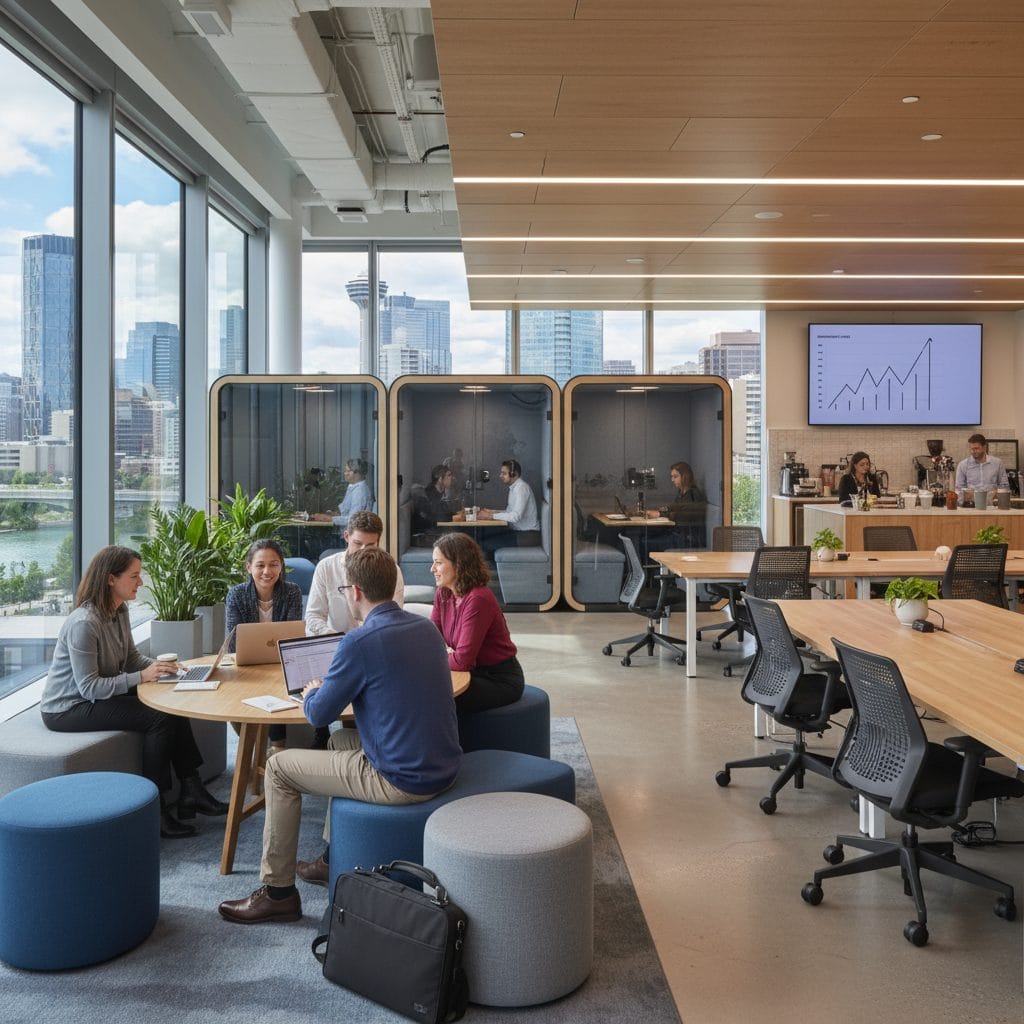
The shift to hybrid work has a profound impact on the demand and design of office spaces. Traditional office layouts, with large open-plan areas and assigned desks, are becoming less common. Instead, there’s a growing demand for flexible, adaptable spaces that can accommodate a mix of individual work, team collaboration, and client meetings. In Calgary, this trend has led to the rise of co-working spaces and the renovation of existing office buildings to include more amenities and flexible layouts. Landlords are responding by offering shorter lease terms, more flexible lease agreements, and including features like shared meeting rooms, collaborative zones, and enhanced technology infrastructure. The design of these spaces is also changing. We’re seeing more focus on natural light, ergonomic furniture, and spaces that support a variety of work styles. Buildings in areas like the Beltline and Eau Claire are adapting quickly to meet these evolving needs.
The Evolving Landscape of Calgary’s Commercial Real Estate Market
The commercial real estate market in Calgary is dynamic, and the rise of hybrid workspaces is accelerating its evolution. This impacts every aspect of the market, from leasing strategies to investment decisions. Understanding these changes is critical for anyone involved in commercial real estate, whether as a tenant, investor, or broker. Calgary hybrid workspace office trends 2026 are indicative of a broader shift in how we think about work and the spaces we occupy.
Impact on Leasing and Property Valuation
Leasing strategies are being significantly impacted by the shift to hybrid work. Landlords in Calgary are increasingly offering more flexible lease terms to attract tenants. This may include shorter lease durations, options for expansion or contraction, and more flexible build-out options. Property valuations are also evolving. Factors such as a building’s adaptability to hybrid work models, its location, and the amenities it offers are playing an increasingly important role in determining its value. Buildings that can accommodate flexible layouts, offer strong technology infrastructure, and provide amenities that attract employees are likely to command higher values. This is particularly true in desirable areas of Calgary, such as the downtown core and the trendy communities surrounding it. Cap rates are also shifting as investors assess the risk and return profiles of properties with different characteristics.
Adapting to New Market Realities
To thrive in the evolving market, landlords and property managers in Calgary must adapt to new market realities. This means understanding the needs of tenants who are adopting hybrid work models and being prepared to offer flexible and attractive spaces. Embracing technology is also essential. Smart building technologies, such as energy-efficient systems, tenant-controlled climate control, and integrated security systems, can enhance the appeal of a property. Building owners must also consider how to make their buildings more attractive to tenants. This may involve offering amenities such as on-site fitness centers, bike storage, and outdoor spaces. Collaboration with local businesses and community organizations can also enhance a building’s appeal and help attract and retain tenants.
Investment Opportunities and Considerations in a Hybrid World
The rise of Calgary hybrid workspace office trends 2026 also presents unique investment opportunities and considerations. Investors who understand these trends and can identify properties that align with the evolving needs of businesses are well-positioned to succeed. This demands a nuanced approach, looking beyond the traditional metrics to assess the long-term viability of commercial real estate investments.
Identifying Promising Investment Properties
When identifying promising investment properties in Calgary, it’s essential to focus on assets that cater to the hybrid work model. Properties with flexible floor plans, robust technology infrastructure, and desirable amenities are particularly attractive. Location is also a key factor. Properties in areas with good public transportation, easy access to amenities, and a strong sense of community are likely to attract tenants. Look for buildings that are adaptable and can be easily reconfigured to meet the changing needs of tenants. Consider properties in areas like Inglewood and Kensington, known for their vibrant communities and appeal to a diverse workforce. Investors should also carefully evaluate the building’s management and operational efficiency. Efficiently managed buildings with high tenant satisfaction are likely to perform better over the long term.
Financial Analysis and Risk Assessment
A thorough financial analysis and risk assessment are essential before investing in any commercial property. Investors should carefully evaluate the potential cash flow, occupancy rates, and expenses associated with a property. The cap rate, or capitalization rate, is a key metric that can help investors assess the potential return on investment. It’s also important to assess the risks associated with the investment. This includes factors such as market conditions, tenant creditworthiness, and the potential for obsolescence. Investors should also consider the impact of rising interest rates and inflation on their investment returns. In Calgary, understanding the economic drivers and market dynamics is especially critical. Due diligence should involve a detailed review of the lease agreements, property condition, and any potential environmental liabilities.
Future Outlook: Calgary Hybrid Workspace Office Trends Beyond 2026
Looking beyond 2026, the evolution of Calgary hybrid workspace office trends 2026 is likely to continue. The workplace will likely become even more integrated with technology, employee well-being, and sustainability. Businesses and real estate developers who anticipate and adapt to these trends will be best positioned for success.
Emerging Technologies and Their Impact
Emerging technologies will continue to play a pivotal role in shaping the future of workspaces. The adoption of artificial intelligence (AI), the Internet of Things (IoT), and advanced data analytics will become increasingly prevalent. AI can be used to optimize building performance, enhance tenant experiences, and improve energy efficiency. IoT devices can collect data on space utilization, allowing landlords to make informed decisions about building design and management. Augmented reality (AR) and virtual reality (VR) technologies could transform how employees collaborate and interact, creating more immersive and engaging work experiences. Increased cybersecurity measures will be crucial to protect sensitive data and ensure business continuity.
Sustainability and the Future of Work
Sustainability will become an even more significant factor in the design and operation of commercial properties. Green building certifications, such as LEED, will become the norm, and buildings will be designed to minimize their environmental impact. The use of renewable energy sources, such as solar power, will become more widespread. There will be a growing emphasis on employee well-being, including features such as biophilic design (incorporating natural elements), access to outdoor spaces, and amenities that support physical and mental health. This aligns with the overall trend toward creating workplaces that are more attractive and supportive of a diverse workforce. In the long term, these strategies are expected to benefit both tenants and building owners.
Navigating the Changes in Calgary’s Office Market
The Calgary commercial real estate market is in a period of significant transformation. From flexible lease terms to technological innovation, a new reality is unfolding. Understanding Calgary hybrid workspace office trends 2026 is essential for anyone involved in commercial real estate in the city. By staying informed, adapting to change, and embracing innovation, businesses, investors, and property owners can position themselves for success in this evolving market. It’s an exciting time, full of opportunities for those who are prepared to navigate the complexities and embrace the future of work.
For a personalized real estate consultation or to discuss your next property move, visit patelsanket.ca