
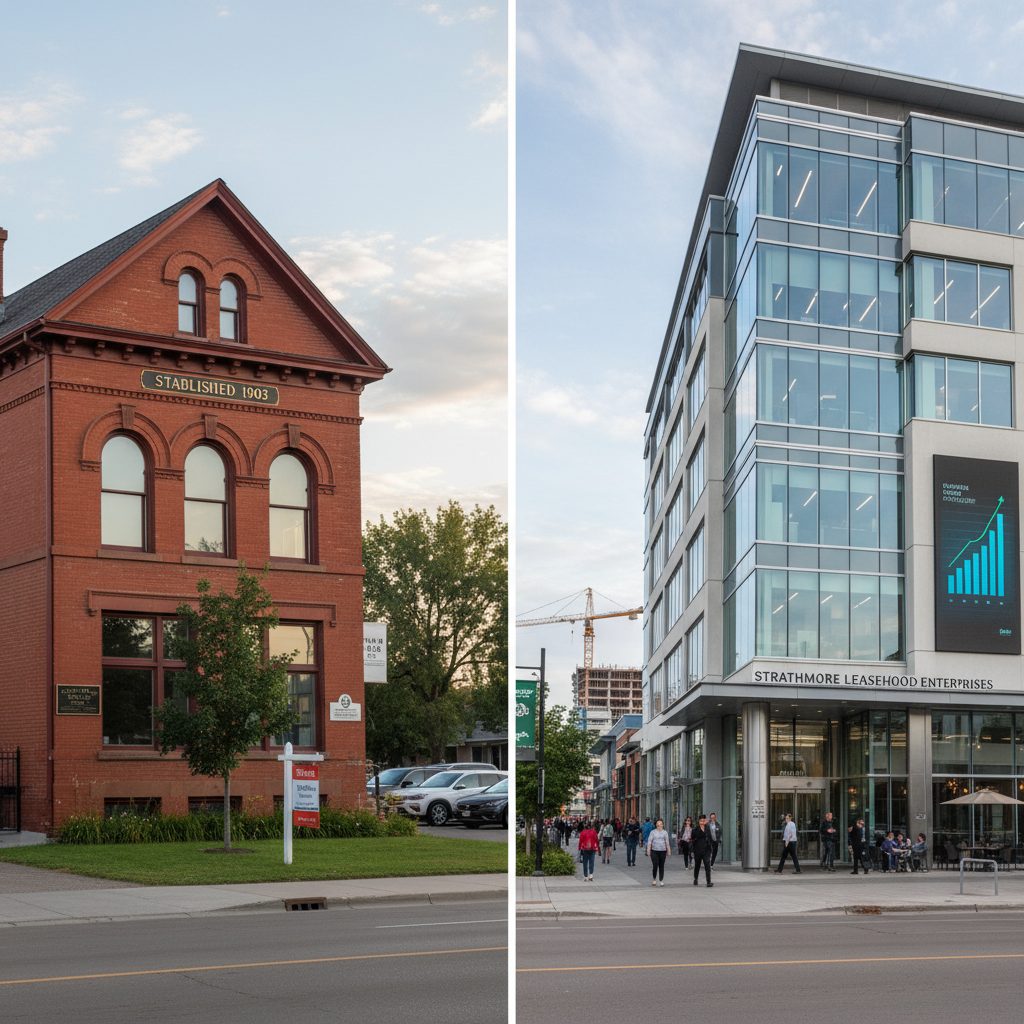
[META]: Freehold vs leasehold commercial Strathmore 2026: Analyze value, ownership, and investment for Strathmore properties.
Understanding Freehold vs Leasehold Commercial Strathmore 2026
When considering commercial property investments in Strathmore for 2026, a fundamental decision point revolves around the ownership structure: freehold versus leasehold. This distinction significantly impacts your investment’s long-term value, operational flexibility, and potential for appreciation. In Strathmore, understanding the nuances of freehold vs leasehold commercial Strathmore 2026 is paramount for making an informed decision. Freehold ownership signifies outright ownership of both the land and the building, granting you complete control and the right to sell or modify the property as you see fit, subject to municipal bylaws and provincial regulations. Conversely, leasehold involves owning the right to occupy and use a property for a specific period, typically defined by a lease agreement with a landlord who owns the underlying freehold interest.
Defining Freehold Commercial Property in Strathmore
Freehold commercial property in Strathmore means you own the land and the structure on it indefinitely. This is the most straightforward form of ownership, akin to owning your home but for a business purpose. For businesses operating in Strathmore, owning the freehold offers a tangible asset that can be leveraged, redeveloped, or sold. The absence of a landlord means no ground rent payments and fewer restrictions on how you use or alter the premises, provided you adhere to Strathmore’s zoning ordinances and building codes. This type of ownership provides the ultimate sense of security and control, making it a highly desirable option for many long-term investors and business owners.
Defining Leasehold Commercial Property in Strathmore
Leasehold commercial property in Strathmore involves a long-term lease agreement for the use of a property. You don’t own the land or the building outright; instead, you pay rent (often referred to as lease payments) to the freehold owner. The duration of the lease can vary significantly, from a few years to several decades, and terms are negotiated in the lease agreement. While you don’t own the asset, a leasehold interest can still be valuable, particularly if the lease is long and has favourable terms, allowing for significant business operations and potential sub-leasing opportunities. Understanding the specific terms of a leasehold agreement is critical, including renewal options, rent escalation clauses, and responsibilities for maintenance and repairs.
Analyzing Value: Freehold vs Leasehold Commercial Strathmore 2026
The concept of value when comparing freehold vs leasehold commercial Strathmore 2026 is multifaceted and depends heavily on your investment goals and risk tolerance. Freehold properties typically appreciate in value over time, mirroring the growth of the land and the building’s condition, offering a capital appreciation potential that leasehold rarely matches directly. The value of a freehold property is easier to ascertain through traditional market comparables and appraisal methods. Leasehold value, on the other hand, is often tied to the remaining term of the lease, the rental income it generates (if sublet), and the favourable nature of the lease terms compared to current market rates.
Capital Appreciation and Long-Term Investment
For investors prioritizing long-term capital appreciation, freehold commercial property in Strathmore generally presents a stronger case for 2026. As the owner of the land and building, you stand to benefit directly from any increases in real estate values within Strathmore. This growth is driven by factors such as economic development, population growth, and infrastructure improvements in the region. You also have the freedom to invest in renovations or upgrades to further enhance the property’s market value. Leasehold interests, while they can be bought and sold, don’t typically offer the same level of direct capital appreciation as freehold. The value of a leasehold is often capped by the lease term and the predetermined rental increases.
Rental Income and Cash Flow Considerations
When considering cash flow and rental income, both freehold and leasehold properties in Strathmore for 2026 have distinct implications. A freehold owner can generate rental income by leasing out the property to tenants, thereby creating a passive income stream. However, they are also responsible for all property expenses, including property taxes, insurance, and maintenance, which can impact net cash flow. A leasehold tenant, conversely, pays rent to the freehold owner but may also have opportunities to sublease parts of the property, potentially generating income that exceeds their lease payments. However, the primary cash flow for a leasehold owner is the profit from their business operations within the leased space.
Ownership Rights and Flexibility: Freehold vs Leasehold Strathmore
The degree of control and flexibility afforded by freehold vs leasehold commercial Strathmore 2026 is a critical factor for businesses and investors. Freehold ownership offers the ultimate autonomy over a property. This means you can customize the space to your exact business needs, undertake significant renovations, or even redevelop the site if zoning permits, without needing landlord approval. This freedom is invaluable for businesses with unique operational requirements or those planning for future expansion within the same location.
Operational Autonomy and Customization
Owning a freehold commercial property in Strathmore means your business is not beholden to the landlord’s aesthetic preferences or renovation schedules. You have the liberty to design and modify your workspace to optimize productivity, branding, and customer experience. Whether it’s installing specialized equipment, altering layouts, or adding unique architectural features, freehold ownership provides this unparalleled operational autonomy. This is especially important for businesses in specialized sectors like manufacturing, research, or hospitality, where bespoke facilities are often essential for success.
Restrictions and Responsibilities
Leasehold agreements, while offering occupancy, inherently come with restrictions imposed by the freehold owner. These can include limitations on renovations, signage, usage of the property, and even operating hours. Any significant changes typically require the landlord’s consent, which can be a lengthy and uncertain process. Furthermore, lease agreements clearly delineate responsibilities for maintenance and repairs. In some leasehold arrangements, known as triple net (NNN) leases, the tenant may be responsible for property taxes, insurance, and common area maintenance (CAM) charges in addition to rent, similar to some freehold responsibilities but without the ownership benefit.
Navigating Legal and Financial Aspects: Strathmore 2026
The legal and financial frameworks surrounding freehold vs leasehold commercial Strathmore 2026 differ significantly and require careful consideration. Acquiring a freehold property involves a traditional purchase transaction, including securing financing, conducting due diligence on the property’s title and physical condition, and managing closing costs. This usually involves a substantial upfront investment. A leasehold acquisition, conversely, involves negotiating a lease agreement and often requires a security deposit or first and last month’s rent, alongside upfront leasehold improvement costs if any are permitted or required.
Due Diligence and Property Acquisition
For freehold properties in Strathmore, due diligence is comprehensive. It includes title searches to ensure clear ownership, environmental assessments, building inspections, and a thorough review of zoning and land use regulations. Securing commercial mortgages for freehold properties is a standard practice, with lenders assessing the property’s value and the borrower’s financial standing. In the case of leasehold properties, due diligence focuses more on the lease agreement itself. This includes understanding the landlord’s financial stability, the terms of occupancy, the duration of the lease, rent escalation clauses, and any exit strategies or assignment clauses. Legal counsel specializing in commercial real estate is essential for reviewing both freehold title documents and leasehold agreements.
Financing Options and Tax Implications
Financing a freehold commercial property in Strathmore for 2026 will likely involve commercial mortgages, which can be secured through banks, credit unions, or private lenders. The loan-to-value ratios and interest rates will depend on the property’s value, the borrower’s creditworthiness, and market conditions. Leasehold financing is less common for the lease itself, as it’s not an asset in the same way. However, businesses may secure loans for leasehold improvements or for the purchase of an existing leasehold interest. Tax implications also vary; freehold owners can claim depreciation on the building and deduct property taxes and mortgage interest as business expenses. Leaseholders can generally deduct their lease payments and any capital expenditures on leasehold improvements over the life of the lease or their business.
Making the Right Choice for Your Strathmore Business in 2026
Deciding between freehold and leasehold commercial property in Strathmore for 2026 hinges on your specific business objectives, financial capacity, and long-term vision. Both models of freehold vs leasehold commercial Strathmore 2026 offer distinct advantages and disadvantages. Freehold provides ownership, equity building, and maximum control, making it ideal for established businesses seeking a stable, appreciating asset. Leasehold, on the other hand, can offer lower upfront costs, greater flexibility to relocate, and reduced responsibility for major property upkeep, appealing to startups or businesses whose location needs may change.
Evaluating Your Business Needs and Goals
A thorough self-assessment of your business needs is the first step. Consider your financial resources: can you afford the significant down payment and ongoing costs associated with freehold ownership? What is your timeline for operating in Strathmore? If you foresee expansion or relocation within a few years, a leasehold might offer more agility. If building long-term equity and having complete control over your operational environment are paramount, freehold becomes more attractive. Analyze the current commercial real estate market trends in Strathmore to understand property values, rental rates, and availability for both types of ownership.
The Role of a Commercial Real Estate Broker
Navigating the complexities of freehold versus leasehold commercial property decisions in Strathmore for 2026 is where the expertise of a seasoned commercial real estate broker becomes invaluable. A broker specializing in the Strathmore market can provide critical insights into local property values, market trends, and legal considerations specific to Alberta. They can help you understand the full implications of lease terms, assist in negotiations with landlords or sellers, and guide you through the due diligence process. Their professional advice ensures you make a strategic decision that aligns with your business’s financial health and long-term success in Strathmore.
For a personalized real estate consultation or to discuss your next property move, visit patelsanket.ca